Here’s How Protein, Fiber, and Blood Sugar Balance Activate Your Body’s Own GLP-1
There’s no denying it: GLP-1 drugs have changed the conversation about weight loss in America.
Ozempic. Wegovy. Mounjaro. Zepbound. You’ve seen the celebrity transformations. The magazine covers. The headlines declaring we’ve finally “solved” obesity.
And to be clear — these drugs are genuinely remarkable. For people struggling with severe obesity and metabolic disease, GLP-1 receptor agonists have been nothing short of life-changing.
The clinical results are real. The weight loss is dramatic. The improvements in blood sugar, blood pressure, and cardiovascular risk markers are significant.
We’re not here to demonize pharmaceutical innovation.
But we are here to ask a question that’s not getting nearly enough airtime:
What happens when you stop taking them?
Because the answer to that question changes everything — and it reveals something important about your body that the billion-dollar drug narrative would rather you not focus on.
Your body already makes GLP-1. Naturally. Every single day. And the foods you eat — or don’t eat — directly determine how much of it you produce and how effectively it works.
That’s not a wellness platitude. That’s biochemistry.
The Inconvenient Truth About GLP-1 Drugs: The Rebound Problem
The excitement around GLP-1 medications is understandable. In clinical trials, semaglutide (the active compound in Ozempic and Wegovy) helped participants lose an average of 15–17% of their body weight.
Tirzepatide (Mounjaro/Zepbound), which targets both GLP-1 and GIP receptors, pushed that number even higher — up to 20–22% in some trials.
Those are unprecedented numbers for a pharmaceutical intervention.
But here’s what the initial wave of breathless coverage largely glossed over: these drugs were studied as ongoing, potentially lifelong treatments. They were never designed to be taken for a few months and then stopped.
And when researchers finally studied what happens after discontinuation, the results were sobering.
A major study published in The Lancet — the STEP 1 extension trial — followed participants who had lost significant weight on semaglutide for 68 weeks and then stopped the medication. Within one year of discontinuation:
- Participants regained approximately two-thirds of the weight they had lost.
- Improvements in waist circumference, blood pressure, and lipid profiles largely reversed.
- HbA1c (a key marker of long-term blood sugar control) drifted back toward pre-treatment levels.
Additional data published in JAMA Internal Medicine and presented at major endocrinology conferences through late 2024 and into 2025 have reinforced this pattern. The consensus is becoming difficult to ignore:
For the majority of patients, stopping GLP-1 drugs means regaining most of the weight — often within 12 months.
This isn’t a failure of the drug. The drug does exactly what it’s designed to do while you’re taking it. The problem is that the drug doesn’t fix the underlying metabolic environment. It overrides it. Temporarily.
And that distinction matters enormously.
How GLP-1 Actually Works in Your Body (The Part Most People Don’t Know)
To understand why dietary approaches are so powerful — and why they address something the drugs can’t — you need to understand what GLP-1 actually is.
GLP-1 stands for glucagon-like peptide-1. It’s not a pharmaceutical invention. It’s a hormone your body produces naturally, primarily in the L-cells of your small intestine and colon, every time you eat.
Here’s what GLP-1 does when it’s released:
- It signals your pancreas to release insulin in a glucose-dependent manner – Unlike many diabetes drugs that force insulin release regardless of blood sugar levels (risking dangerous lows), GLP-1 stimulates insulin secretion only when blood sugar is elevated. This is intelligent, responsive blood sugar management.
- It suppresses glucagon – Glucagon is the hormone that tells your liver to dump stored sugar into your bloodstream. When GLP-1 is active, it turns down that signal — preventing the blood sugar spikes that drive fat storage, inflammation, and energy crashes.
- It slows gastric emptying – GLP-1 literally slows the rate at which food leaves your stomach and enters your small intestine. This is one of the primary reasons people on Ozempic feel full longer and eat less. Food sits in the stomach, stretch receptors stay activated, and satiety signals remain elevated.
- It acts on the brain’s appetite centers – GLP-1 receptors exist in the hypothalamus and brainstem — the regions that regulate hunger, reward, and food-seeking behavior. When GLP-1 is elevated, the neurological “drive” to eat diminishes. Food noise — that constant background hum of thinking about your next meal — goes quiet.
- It has direct anti-inflammatory effects – Emerging research shows GLP-1 receptor activation reduces neuroinflammation, cardiovascular inflammation, and even markers of systemic immune activation. This may explain why GLP-1 drugs are showing benefits beyond weight loss — in cardiovascular disease, fatty liver, and potentially even neurodegenerative conditions.
Here’s the key insight: GLP-1 drugs like semaglutide are synthetic analogs of this natural hormone.
They’re engineered to resist the enzymatic breakdown that normally degrades GLP-1 within minutes, allowing them to circulate for days instead of minutes. This creates a sustained, pharmacologically amplified version of a signal your body is already designed to produce.
The drug is powerful precisely because it mimics something your body already does.
Which raises the obvious question: What if you could enhance your body’s own GLP-1 production — naturally, sustainably, without a prescription, without side effects, and without the rebound?
You can. And the science on how to do it is surprisingly robust.
Your Body’s Natural GLP-1 System: What Activates It
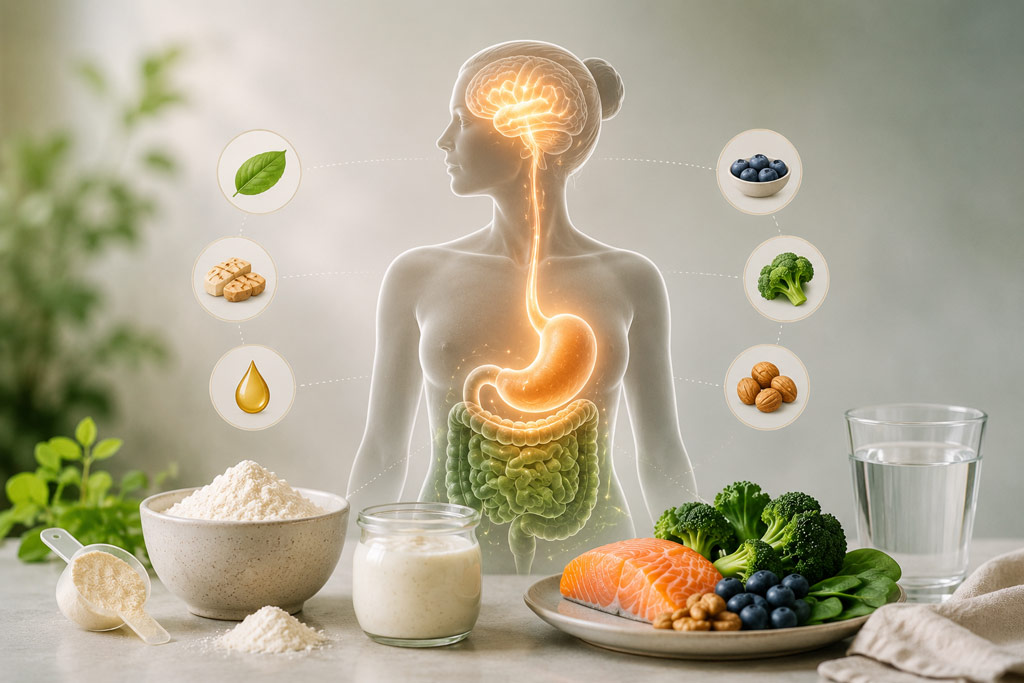
The L-cells in your gut that produce GLP-1 don’t fire randomly. They respond to specific signals — specific nutrients, specific foods, specific eating patterns. And when you understand those signals, you can start to see your diet not just as calories and macros, but as a hormonal signaling system.
Here are the most powerful, evidence-backed dietary strategies for boosting your body’s natural GLP-1 production:
1. Protein: The Most Powerful Natural GLP-1 Trigger
Of all the macronutrients, protein is the strongest stimulator of GLP-1 release.
This has been demonstrated repeatedly in controlled feeding studies. When researchers compare meals of equal calories but different macronutrient compositions, high-protein meals consistently produce the greatest GLP-1 response — and the most sustained appetite suppression.
A study in The American Journal of Clinical Nutrition found that increasing protein from 15% to 30% of total calories led to:
- Significant increases in postprandial GLP-1 levels
- Dramatic reductions in hunger and ad libitum calorie intake (participants spontaneously ate approximately 441 fewer calories per day)
- Greater fat loss with preserved lean muscle mass
The mechanism is elegant: amino acids from digested protein directly interact with nutrient-sensing receptors on L-cells, triggering GLP-1 secretion. Leucine — an amino acid particularly abundant in whey protein isolate — appears to be an especially potent trigger.
Not all protein sources are equal here. The speed of digestion, the amino acid profile, and the degree of processing all matter:
- Whey protein isolate is rapidly digested and exceptionally leucine-rich, making it one of the most potent GLP-1 stimulators studied. It has been shown to reduce post-meal blood glucose by 28% in some trials — partly through GLP-1-mediated insulin enhancement.
- Collagen peptides, while lower in leucine, provide high levels of glycine and proline — amino acids that support gut lining integrity. Since GLP-1 is produced in the gut, maintaining a healthy intestinal environment is foundational to healthy GLP-1 signaling. A damaged gut produces less GLP-1. Full stop.
- Whole food protein sources (eggs, wild-caught fish, grass-fed meat) provide amino acids in a matrix of other nutrients (vitamins, minerals, fatty acids) that support the broader metabolic ecosystem.
The practical takeaway? Every meal should contain a meaningful dose of high-quality protein — ideally 25–40 grams — to activate your natural GLP-1 system. Starting the day with protein (rather than a carbohydrate-heavy breakfast of cereal, toast, or oatmeal) sets the hormonal tone for the entire day.
2. Fiber: The GLP-1 Amplifier Your Gut Is Starving For
If protein is the ignition switch for GLP-1, fiber is the amplifier.
Here’s why: when soluble fiber reaches the lower gut (where the highest concentration of L-cells reside), it is fermented by beneficial gut bacteria into short-chain fatty acids (SCFAs) — particularly butyrate, propionate, and acetate. These SCFAs directly bind to receptors on L-cells, triggering sustained GLP-1 release.
This is a slower, longer-lasting mechanism than the protein-triggered GLP-1 burst. It’s more like a steady hum than a spike — which is exactly what you want for sustained appetite control and blood sugar stability.
Studies in Diabetes Care and The Journal of Nutrition have shown that diets high in soluble fiber:
- Increase GLP-1 secretion by 20–30% compared to low-fiber diets
- Improve insulin sensitivity independent of weight loss
- Reduce postprandial glucose excursions (the blood sugar rollercoaster after meals)
- Feed beneficial gut bacteria that, in turn, produce more SCFAs — creating a virtuous cycle
The best sources of GLP-1-boosting fiber include:
- Prebiotic fibers: inulin (from chicory root, Jerusalem artichoke, garlic, onions), resistant starch (from cooked-and-cooled potatoes, green bananas), and beta-glucan (from oats, mushrooms)
- Vegetables: artichokes, asparagus, leeks, broccoli, Brussels sprouts
- Seeds: flaxseeds, chia seeds (also provide omega-3 fatty acids)
- Legumes: lentils, black beans, chickpeas (for those who tolerate them)
The average American consumes approximately 15 grams of fiber per day. Optimal GLP-1 signaling likely requires 30–50 grams. This gap may be one of the most underappreciated contributors to the metabolic dysfunction crisis.
Here’s the connection most people miss: fiber’s GLP-1-boosting effect depends on a healthy gut microbiome to produce SCFAs. If your gut bacteria are depleted (from antibiotics, artificial sweeteners, emulsifiers, or a highly processed diet), you lose the downstream GLP-1 benefit even if you’re eating enough fiber.
This is why gut health and metabolic health are not separate categories — they’re the same system.
3. Minimizing Blood Sugar Spikes: Keeping the System Sensitive
The third pillar of natural GLP-1 optimization isn’t about adding something to your diet — it’s about removing the interference.
Chronically elevated blood sugar and insulin levels create a state of GLP-1 resistance — similar in concept to insulin resistance. When your metabolic system is constantly bombarded with glucose from ultra-processed foods, refined carbohydrates, and hidden sugars, the GLP-1 signaling pathway becomes blunted. Your L-cells still produce GLP-1, but the downstream response is dampened.
This is part of why metabolic dysfunction is so self-reinforcing: the worse your blood sugar regulation gets, the less effectively your natural appetite-regulating hormones work, which leads to more overeating, which worsens blood sugar regulation.
GLP-1 drugs break this cycle by brute force — flooding the system with supraphysiological doses of a GLP-1 analog that overwhelms the resistance.
But you can also break the cycle by removing the insult:
- Eliminate or dramatically reduce added sugars and refined carbohydrates – These are the primary drivers of the glucose-insulin spikes that desensitize GLP-1 signaling.
- Be wary of “sugar-free” alternatives – Research published in Cell Metabolism has shown that artificial sweeteners (sucralose, acesulfame-K) and some sugar alcohols can disrupt gut bacteria and impair GLP-1 secretion — meaning the “zero sugar” product in your pantry may be silently sabotaging the very hormone system you’re trying to support.
- Prioritize whole, minimally processed foods – Ultra-processed foods — independent of their macronutrient profile — have been shown to dysregulate appetite hormones, including GLP-1. The additives, emulsifiers, and industrial processing methods appear to damage the gut environment where GLP-1 is produced.
- Consider meal sequencing – Emerging research (popularized by biochemist Jessie Inchauspé, the “Glucose Goddess”) shows that eating protein and vegetables before carbohydrates in a meal can reduce the subsequent glucose spike by 30–40% — enhancing the GLP-1 response and improving satiety.
- Don’t fear healthy fats – Monounsaturated fats (olive oil, avocado) and omega-3 fatty acids also stimulate GLP-1 release through interaction with fatty acid receptors on L-cells. The low-fat dietary paradigm of the past several decades may have inadvertently suppressed natural GLP-1 signaling.
The Gut Connection: Why GLP-1 Starts with Your Microbiome
Here’s something that deserves its own section because it’s so critical and so often overlooked:
GLP-1 is produced in your gut. The health of your gut directly determines how much GLP-1 you make.
This isn’t a metaphor. The L-cells that secrete GLP-1 are embedded in the intestinal lining — the same lining that is compromised in “leaky gut” (increased intestinal permeability). When that lining is damaged by:
- Ultra-processed food additives (emulsifiers like polysorbate 80 and carboxymethylcellulose)
- Artificial sweeteners that disrupt microbial balance
- Chronic low-level glyphosate exposure from conventionally grown foods
- Inflammatory seed oils that shift the omega-6 to omega-3 ratio
- Stress, alcohol, and NSAID (nonsteroidal anti-inflammatory drugs) overuse
…the L-cells become fewer, less responsive, and less capable of producing adequate GLP-1.
Meanwhile, a thriving gut microbiome — rich in Akkermansia muciniphila, Lactobacillus, Bifidobacteria, and other beneficial species — directly enhances GLP-1 production through SCFA signaling, mucus layer maintenance, and tight junction support.
This means that every dietary choice that damages your gut is also a choice that impairs your natural GLP-1 system. And every choice that heals and supports your gut is one that enhances it.
- Collagen peptides, with their high glycine and glutamine content, support gut mucosal repair.
- Clean whey protein isolate provides leucine for direct GLP-1 stimulation.
- Prebiotic fibers feed the bacteria that produce GLP-1-boosting SCFAs.
- Avoiding artificial sweeteners, seed oils, and ultra-processed additives protects the L-cells themselves.
It’s all one system. And when you support it with real, clean, intentionally sourced nutrition, it works remarkably well.
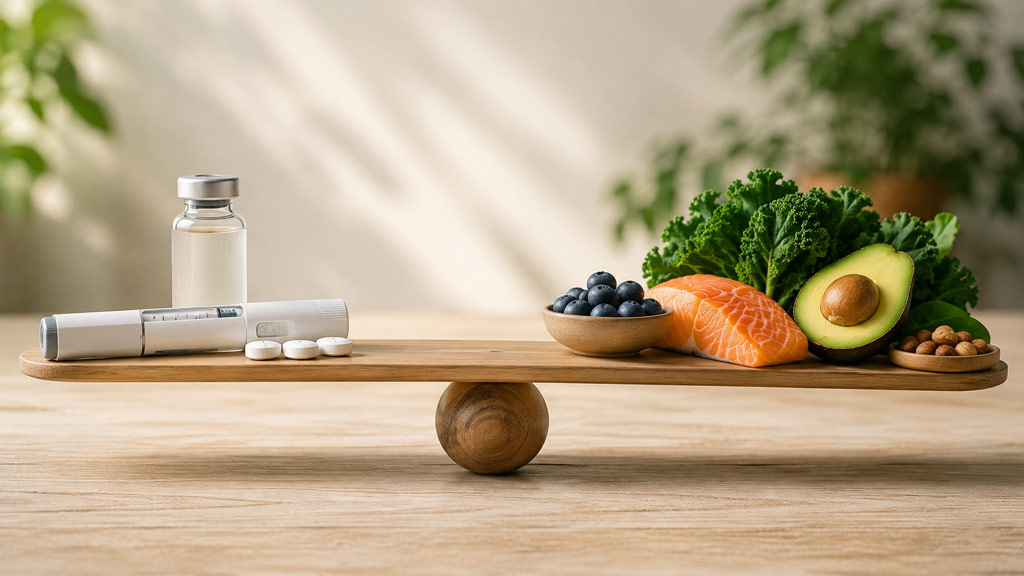
The Drug vs. Diet Framework: Not Either/Or — But Eyes Wide Open
Let’s be honest and fair about the landscape:
For some people, GLP-1 drugs are medically necessary and genuinely life-saving. Severe obesity is a complex, multifactorial condition with genetic, neurological, and environmental components.
No one should feel shamed for using pharmaceutical tools to address it. If your doctor has prescribed a GLP-1 medication, this article is not suggesting you stop.
But here’s what the cultural conversation around these drugs is missing:
- They are currently positioned as the solution, when they are more accurately a tool. Without concurrent dietary and lifestyle changes, the benefits are temporary. The rebound data makes this unambiguous.
- The majority of metabolically unhealthy Americans don’t need Ozempic — they need to stop eating ultra-processed food and start eating adequate protein. This isn’t oversimplification; it’s what the metabolic science actually shows. The 93% of Americans who are metabolically unhealthy didn’t get there because of a semaglutide deficiency. They got there because the modern food environment has systematically disrupted the very hormonal systems (including GLP-1) that regulate appetite, blood sugar, and fat storage.
- The dietary approach doesn’t just mimic the drug — it addresses the root cause. GLP-1 drugs override a broken system. Dietary optimization repairs the system. One requires lifelong pharmaceutical dependence; the other builds self-sustaining metabolic resilience.
- Even for those on GLP-1 drugs, dietary optimization dramatically improves outcomes. The patients who maintain their weight loss after discontinuation? They’re overwhelmingly the ones who used the drug as a window of opportunity to establish better eating patterns — higher protein, more fiber, fewer processed foods, better blood sugar control. The drug bought them time and reduced the noise. The diet provided the foundation.
A Practical Framework: Eating for Natural GLP-1 Optimization
So what does this look like in practice? Here’s a straightforward framework:
Morning: Lead with Protein
Start the day with 25–40g of high-quality protein. A clean whey protein isolate shake, eggs, or a collagen-enriched smoothie. Avoid the blood sugar bomb of cereal, toast, juice, or sweetened oatmeal. This first meal sets your hormonal trajectory for the day.
Every Meal: The Protein + Fiber + Healthy Fat Trifecta
Structure meals around a meaningful protein source (palm-sized portion minimum), abundant non-starchy vegetables (fiber + micronutrients), and a source of healthy fat (olive oil, avocado, nuts). If you’re including carbohydrates, eat them last — after the protein and vegetables.
Snacks: Make Them Count
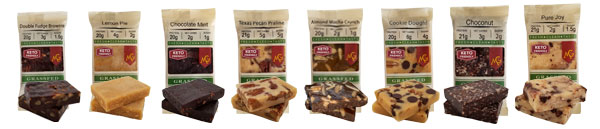
If you snack, make it protein-forward: a clean protein bar (check the ingredients — avoid artificial sweeteners, sugar alcohols, seed oils, and excessive additives), a handful of nuts, hard-boiled eggs, or a collagen protein bite. Avoid the blood sugar rollercoaster of carb-heavy snack foods.
Protect Your Gut
Avoid the ingredients that damage the intestinal environment where GLP-1 is produced: artificial sweeteners, emulsifiers, carrageenan, and heavily processed foods. Include gut-supporting foods and nutrients: bone broth, fermented vegetables, collagen peptides, and prebiotic fiber.
Read the Label — The Whole Label
Not the front of the package. Not the nutrition facts panel alone. The ingredient list. If you see words you can’t pronounce, seed oils (soybean, canola, sunflower, safflower), artificial sweeteners (sucralose, acesulfame-K, aspartame), or sugar alcohols (erythritol, maltitol), understand that these ingredients may be actively working against the hormonal system you’re trying to support.
What’s the takeaway?
GLP-1 drugs are a scientific triumph. They’ve shown us, in pharmacological high-definition, just how powerful the GLP-1 pathway is for weight management, appetite regulation, and metabolic health.
But they’ve also accidentally revealed something even more important:
Your body already has this system. It’s built in. It’s elegant. It’s responsive. And it’s been waiting for the right inputs.
Those inputs aren’t complicated. They’re not expensive. They don’t require a prescription or weekly injections or navigating insurance pre-authorizations.
They require protein. Fiber. Real food. A healthy gut. And the willingness to stop outsourcing your metabolic health to an industrial food system that has spent decades engineering products that disrupt the very hormones designed to keep you healthy.
The GLP-1 drug boom has given us an incredible gift — not just the medications themselves, but the understanding of what this hormone does and how central it is to metabolic health.
Now it’s up to us to use that understanding. Not as a reason to depend on a drug indefinitely, but as a roadmap for feeding our bodies in a way that activates our own, innate metabolic intelligence.
Every meal is a GLP-1 decision.
Make it count.
The MariGold Difference
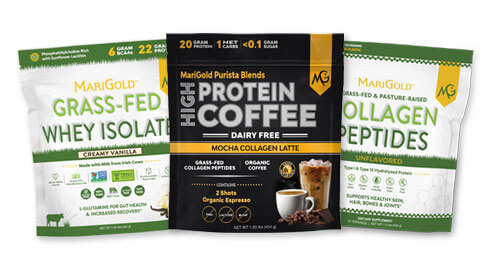
At MariGold, we’ve been formulating for this approach long before GLP-1 drugs made headlines — clean whey protein isolate for leucine-rich GLP-1 activation, collagen peptides for gut barrier support, real fiber from real ingredients, and zero artificial sweeteners, seed oils, or sugar alcohols that could sabotage your metabolic health.
Not because it was trendy. Because the science has always pointed here.
Your body knows what to do. We just make it easier to give it what it needs