Fat has had quite the reputation over the years. First, we were told to avoid it. Then certain fats became the stars of the nutrition world. And somewhere along the way, MCTs entered the conversation, particularly among people interested in energy, metabolic health, brain function, and ketogenic diets.
But what exactly makes MCTs different from the fats in olive oil, avocados, or even regular coconut oil?
The answer has less to do with trendy diets and more to do with the fascinating way our bodies digest and metabolize different types of fat.
MCTs, or medium-chain triglycerides, are a type of dietary fat that the body can absorb and metabolize relatively quickly. They’re found naturally in coconut oil and certain dairy products, and they’re also available in more concentrated forms. Their unique structure allows them to follow a somewhat different metabolic pathway than most long-chain dietary fats.
That difference has made MCTs an interesting subject of research, particularly when it comes to ketone production, energy metabolism, cognitive health, and weight management.
Let’s explore what makes coconut-derived MCTs unique, what the science actually tells us about their potential benefits, and why they’re finding their way into everything from nutrition supplements to your morning coffee.
What Are MCTs?
MCT stands for medium-chain triglycerides, a type of fat made up of fatty acids with relatively short carbon chains.
To understand why that matters, it helps to know that dietary fats aren’t all structured the same way.
Most of the fats we eat contain long-chain fatty acids. These are found in foods such as olive oil, nuts, avocados, and many animal products. MCTs, on the other hand, contain medium-length fatty acid chains, which influence how they’re digested, absorbed, and transported through the body.
Here’s the interesting part: many medium-chain fatty acids can travel more directly from the digestive tract to the liver, where they’re available for metabolism. Long-chain fats generally require more processing and are transported through the lymphatic system before entering the bloodstream.
That doesn’t automatically make one type of fat healthier than another. It simply means the body handles them differently.
Where Do MCTs Come From?
MCTs occur naturally in several foods, including:
- Coconut oil and coconut meat
- Palm kernel oil
- Butter and ghee
- Milk, yogurt, and certain cheeses
Coconut oil is one of the best-known natural sources of medium-chain fatty acids. However, not all the fatty acids in coconut oil behave alike.
Concentrated MCT oil is typically produced by separating and refining particular fatty acids, often from coconut oil, to create a product with a higher proportion of the medium-chain fats most commonly studied for their metabolic effects.
Not All MCTs Are the Same: Understanding C8, C10, and C12
You may have noticed terms like C8 and C10 on MCT products. These aren’t just technical-sounding labels. They describe the number of carbon atoms in the fatty acid chain, and those differences can influence how each fat behaves in the body.
C8: Caprylic Acid
Caprylic acid contains eight carbon atoms and is one of the most extensively studied MCTs for ketone production.
Research suggests that C8 can raise circulating ketone levels more efficiently than some other medium-chain fatty acids. This makes it especially interesting to researchers studying ketogenic metabolism and the use of ketones as an alternative fuel source.
C10: Capric Acid
Capric acid contains ten carbon atoms. Like C8, it can be absorbed and metabolized relatively quickly and may contribute to ketone production.
C8 and C10 are frequently combined in commercial MCT oils because both have metabolic characteristics that distinguish them from longer-chain dietary fats.
C12: Lauric Acid
Lauric acid contains twelve carbon atoms and is the predominant fatty acid in coconut oil.
Although it’s often classified as a medium-chain fatty acid based on its chemical structure, lauric acid behaves differently from C8 and C10 during digestion and transport. A larger proportion follows pathways associated with longer-chain fats.
This is an important distinction when comparing coconut oil with concentrated MCT products.
The takeaway: When research discusses the effects of MCT supplementation, the specific fatty acids and amounts used matter. Findings from a concentrated C8 or C8/C10 supplement shouldn’t automatically be applied to ordinary coconut oil or every food containing coconut-derived fats.
MCT Oil vs. Coconut Oil: What’s the Difference?
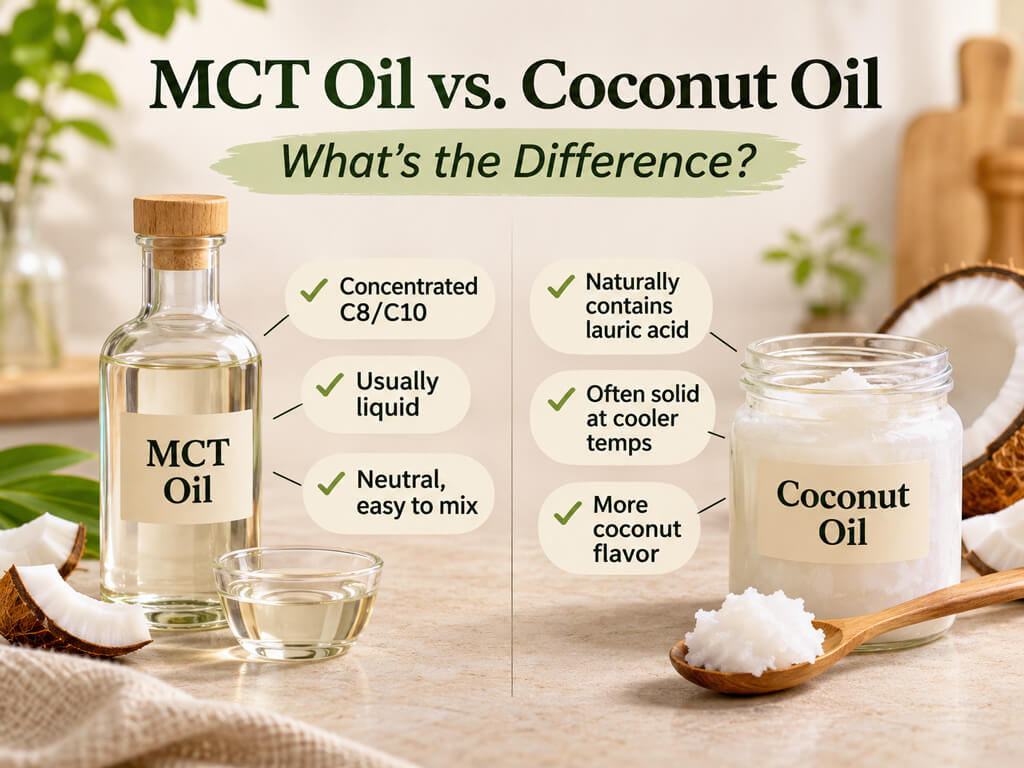
It’s easy to assume that MCT oil and coconut oil are essentially the same thing. After all, many MCT oils are made from coconuts.
But there’s an important difference: coconut oil contains a mixture of fatty acids, while concentrated MCT oil typically contains much higher proportions of C8 and C10.
| Feature | Coconut Oil | Concentrated MCT Oil |
|---|---|---|
| Fatty acid composition | Contains a mixture of fatty acids, predominantly lauric acid (C12) | Usually rich in caprylic (C8), capric (C10), or both |
| Texture | Often solid or semi-solid at cooler room temperatures | Typically liquid at room temperature |
| Metabolism | Varies according to the fatty acids present | C8 and C10 are generally absorbed and metabolized relatively quickly |
| Ketone production | Can contribute, but generally produces a smaller response than concentrated C8-rich MCT oil at comparable doses | May increase circulating ketones, depending on dose and composition |
| Common uses | Cooking, baking, and general food preparation | Coffee, smoothies, nutrition supplements, and specialized dietary applications |
Neither is automatically the better choice for every purpose. Coconut oil is a versatile culinary ingredient, while concentrated MCT oils are often chosen for their specific fatty acid composition.
Both also provide substantial amounts of saturated fat, making overall dietary balance important.
How Does Your Body Turn MCTs Into Energy?
This is where MCTs become especially interesting.
When you eat most long-chain fats, your digestive system packages them into particles called chylomicrons, which travel through the lymphatic system before reaching the bloodstream.
Medium-chain fatty acids, particularly C8 and C10, can be absorbed more directly into the portal circulation, which carries nutrients toward the liver.
Once there, they can undergo a process called beta-oxidation, in which fatty acids are broken down to produce energy.
The liver may also convert some of these fatty acids into ketone bodies.
And those ketones are a major reason MCTs have attracted so much scientific interest.
What Are Ketones, and Why Do They Matter?
Ketones are molecules produced primarily by the liver when fatty acids are metabolized under certain conditions. They can serve as an alternative energy source for several tissues, including the brain.
Your body typically relies heavily on glucose for fuel. But when carbohydrate availability is reduced, such as during fasting or a ketogenic diet, ketone production generally increases.
Because certain MCTs are readily converted into ketones, consuming them can increase ketone levels even without following a strict ketogenic diet. The magnitude of that increase depends on factors such as the type of MCT, the dose, and what else you’ve eaten.
That doesn’t mean MCTs provide an instant burst of energy you can necessarily feel, or that an increase in ketones automatically translates to better physical or mental performance.
It does, however, explain why MCTs are being studied as a source of alternative metabolic fuel.
5 Potential Benefits of MCTs: What Does the Research Say?
Now for the question most people are curious about: What can MCTs actually do for your health?
The research is intriguing, but not all proposed benefits have the same level of evidence. Some effects, such as raising ketone levels, are well established. Others, such as improving everyday mental performance or supporting long-term weight management, are still being investigated.
1. MCTs Can Provide a Readily Metabolized Source of Dietary Energy
One of the defining characteristics of C8 and C10 MCTs is the way they’re digested and metabolized.
Because they can be absorbed and transported to the liver relatively efficiently, they’re available for oxidation more quickly than many long-chain fats.
That makes them a useful energy source in certain specialized nutritional settings and an interesting ingredient for people exploring different approaches to dietary fat intake.
However, it’s important to distinguish rapid metabolism from a guaranteed energy boost.
While MCTs can be used for fuel, consuming them doesn’t necessarily make someone feel more energetic, increase endurance, or eliminate the familiar afternoon slump. Those outcomes depend on many factors, and the research is considerably less definitive.
What we know: Certain MCTs are metabolized differently from long-chain fats and can provide energy relatively quickly.
What we don’t know: Whether routine, small servings of MCTs meaningfully improve everyday energy levels in otherwise healthy adults.
2. MCTs May Support Ketone Production
Of all the proposed benefits of MCTs, their ability to increase ketone production is among the most consistently demonstrated.
C8, in particular, is efficient at generating ketones, although responses vary with the amount consumed and the individual’s metabolic state.
This is relevant to people following ketogenic dietary patterns because MCTs may help increase ketone availability without requiring the same degree of carbohydrate restriction.
But here’s an important distinction: higher ketone levels aren’t automatically proof of greater fat loss.
The body can produce ketones from the MCTs you’ve just consumed. That doesn’t necessarily mean it’s burning more of its stored body fat.
Similarly, having more ketones in your bloodstream doesn’t guarantee that you’re in the same metabolic state as someone following a carefully formulated ketogenic diet.
Think of ketones as another fuel option available to the body, not a shortcut that overrides the fundamentals of nutrition and energy balance.
3. MCTs Are Being Studied for Brain Health and Cognitive Function
Perhaps one of the most fascinating areas of MCT research involves the brain.
Under normal circumstances, the brain depends heavily on glucose to meet its energy needs. But it can also use ketone bodies as an alternative fuel source.
Researchers are particularly interested in whether increasing ketone availability could help support brain energy metabolism in certain populations, including older adults and people experiencing cognitive decline.
Some small clinical trials have reported improvements in particular memory or cognitive measurements following MCT supplementation.
For example, a 2022 systematic review of randomized controlled trials found encouraging results for some aspects of memory in older adults without dementia. However, the number of studies was small, and the researchers emphasized the need for additional research.
A separate 2024 systematic review examining MCTs in Alzheimer’s disease and mild cognitive impairment found increases in ketone availability and brain ketone metabolism, but improvements in cognitive testing were inconsistent. The authors concluded that the evidence was insufficient to recommend MCTs as a comparable treatment for these conditions.
In other words, the science offers an interesting possibility, but there’s a substantial difference between supporting brain energy metabolism and demonstrating meaningful improvements in memory or cognition.
What we know: The brain can use ketones for fuel, and certain MCT supplements can increase their availability.
What we’re still learning: Whether MCT supplementation produces reliable, lasting improvements in cognitive performance or brain health across different populations.
MCTs should not be considered a treatment or prevention strategy for dementia or other neurological conditions.
4. MCTs May Have Modest Effects on Weight Management
Can MCT oil help with weight loss?
This is one of the most frequently asked questions about MCTs, and the answer deserves a little nuance.
Some studies have examined whether replacing long-chain dietary fats with MCTs affects body weight, body composition, appetite, or energy expenditure.
A 2024 systematic review and meta-analysis reported modest improvements in weight-related outcomes among people with overweight or obesity consuming MCT-enriched diets compared with diets enriched in long-chain fats.
A 2026 systematic review and meta-analysis also found reductions in fat mass, body weight, and waist circumference across seven randomized controlled trials. However, the researchers rated the certainty of the evidence as low.
That’s an encouraging area of research, but it doesn’t mean adding MCT oil to an existing diet will automatically result in weight loss.
The distinction is important because many studies compare different types of fats within a controlled diet rather than simply adding extra calories from MCTs.
MCTs are still fats, and fats contain calories. Adding several tablespoons of MCT oil to your usual meals increases your total energy intake unless those calories replace something else.
Weight management also depends on overall dietary habits, activity, sleep, health conditions, and many other factors.
The bottom line: Replacing certain long-chain fats with MCTs may offer modest weight-management advantages in some circumstances, but MCT oil isn’t a stand-alone fat-loss solution.
5. MCTs Have Unique Applications in Digestive and Medical Nutrition
Because MCTs are digested and absorbed differently from many long-chain fats, they’ve been used in specialized nutritional approaches for people with certain fat-absorption difficulties.
For example, healthcare professionals may incorporate MCTs into carefully designed nutrition plans when conventional fat digestion or absorption is impaired.
This medical application is part of what makes MCTs nutritionally interesting.
But it doesn’t mean MCT oil is automatically easier on everyone’s stomach.
In fact, larger servings of MCT oil can cause cramping, nausea, loose stools, or diarrhea, particularly when someone consumes too much at once.
MCTs also don’t replace essential fatty acids or the nutritional benefits of a varied diet containing other healthy fat sources.
What we know: MCTs have distinct absorption characteristics that can be useful in certain clinical nutrition settings.
What we shouldn’t assume: That MCTs improve the gut microbiome, treat digestive disorders, or eliminate bloating in otherwise healthy individuals.
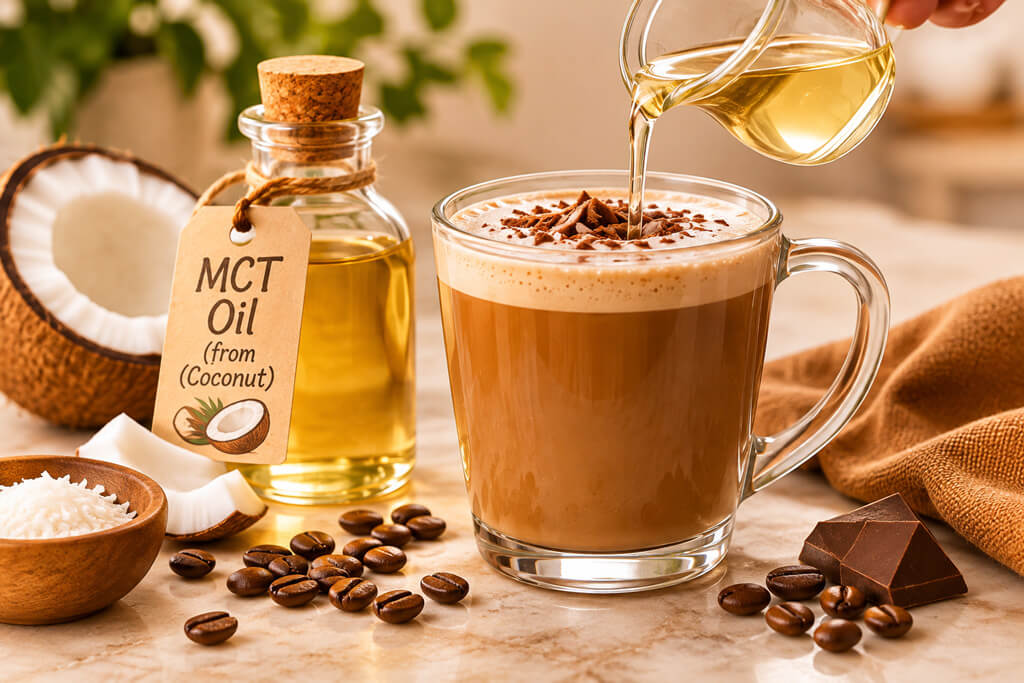
Why Are MCTs Added to Coffee?
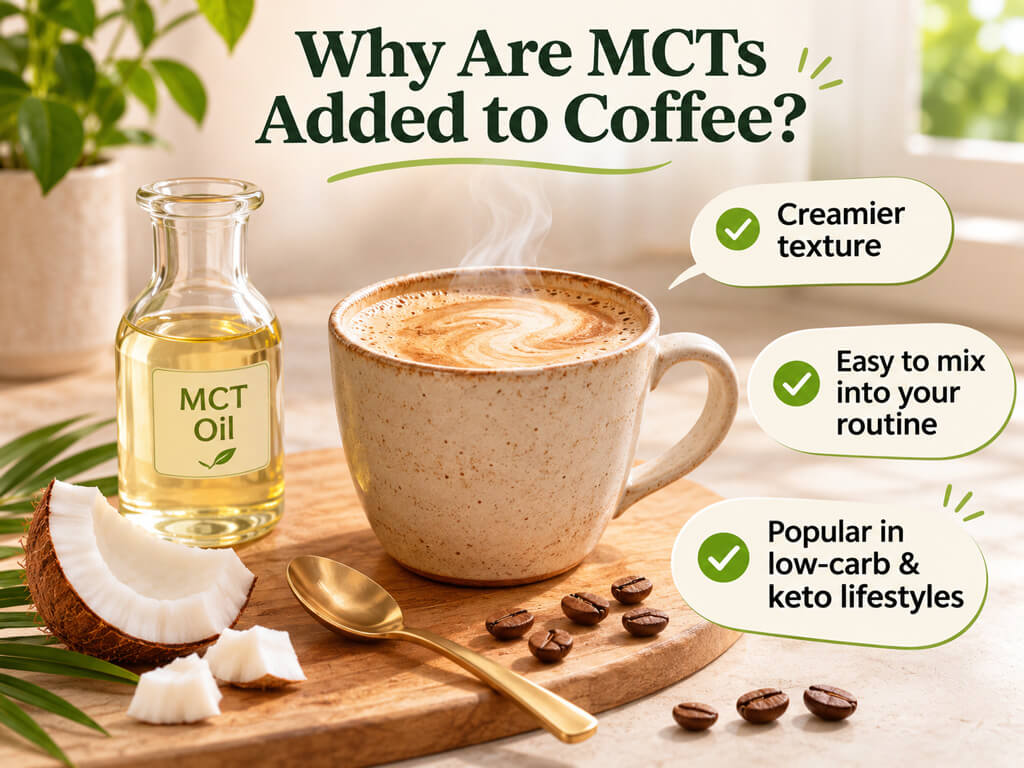
For many people, the first introduction to MCTs isn’t a nutrition textbook or a research paper. It’s coffee.
MCT coffee became popular alongside ketogenic and lower-carbohydrate eating patterns, particularly among people looking for ways to incorporate dietary fats into their morning routines.
And while some coffee trends can get a little carried away with their promises, there are practical reasons MCTs have become popular in coffee formulations.
A Creamier Coffee Experience
MCTs are fats, and fats can contribute to a richer, smoother mouthfeel when properly incorporated into a beverage.
When an appropriate amount of MCT-containing ingredients is blended or emulsified into coffee, the result can be a creamier drinking experience without necessarily relying on conventional dairy cream.
The precise texture depends on the formulation, including the types and amounts of fats, proteins, and other ingredients.
That makes MCTs interesting not only from a nutritional perspective but also from a food-science perspective. Sometimes an ingredient contributes to the overall experience of a product as much as it does to its nutritional profile.
A Convenient Way to Include Dietary Fats
Coffee is already part of many people’s daily routines. Incorporating MCTs into a formulated coffee product can be a convenient alternative to measuring and blending separate oils into a homemade drink.
And because MCTs are commonly used in lower-carbohydrate dietary approaches, MCT-containing coffees may appeal to people who pay close attention to their macronutrient choices.
Still, the amount matters.
The benefits observed in MCT research frequently involve specific doses, compositions, and supplementation schedules. A coffee containing a smaller amount of coconut-derived MCTs should not be assumed to produce the same effects.
How Much MCT Oil Should You Take?
There’s no single ideal amount of MCT oil that applies to everyone.
Clinical studies use different amounts depending on the outcome being investigated, and results from one dose or formulation can’t automatically be generalized to another.
For example, some cognitive research has examined daily MCT doses measured in tens of grams, substantially more than the small quantities that may be present in ordinary foods or beverages.
If you’re considering concentrated MCT oil as a separate supplement, it’s generally wise to begin with a small amount, follow the product’s directions, and assess digestive tolerance before increasing intake.
People with liver disease, certain metabolic conditions, or other medical concerns should discuss MCT supplementation with their healthcare professional first.
And remember that MCT oil contributes calories and saturated fat, so it’s worth considering how it fits into your overall dietary pattern.
Are There Any Side Effects of MCT Oil?
Although MCTs are naturally occurring dietary fats, concentrated MCT oil isn’t necessarily comfortable for everyone, particularly in large amounts.
Potential side effects include:
- Abdominal cramping or discomfort
- Nausea
- Loose stools or diarrhea
- Other digestive symptoms, particularly with larger servings
These effects are often dose-related, which is one reason gradual introduction is generally recommended for people using a separate MCT supplement.
Because MCT oils are rich in saturated fat, people managing cardiovascular risk factors or liver-related conditions should also seek individualized advice rather than assuming that MCT oil is automatically beneficial.
As with most nutrition ingredients, more isn’t necessarily better.
The Bottom Line: MCTs Are Interesting, but Context Matters
Medium-chain triglycerides offer a fascinating example of how the structure of a nutrient influences what happens after we eat it.
Unlike many longer-chain fats, certain MCTs can be metabolized relatively quickly and converted into ketones, giving researchers an interesting window into energy metabolism, brain function, and specialized nutrition.
Some of the science is well established. Other potential benefits, particularly those involving cognition and weight management, are promising but still require more research.
What matters most is understanding MCTs for what they are: a distinct type of dietary fat with useful properties, not a magic ingredient that replaces good nutrition, movement, sleep, or other healthy habits.
And sometimes, the most enjoyable application is also the simplest: a delicious, creamy cup of coffee made with thoughtfully selected ingredients.
Meet the Creamier Side of MariGold Collagen Coffee
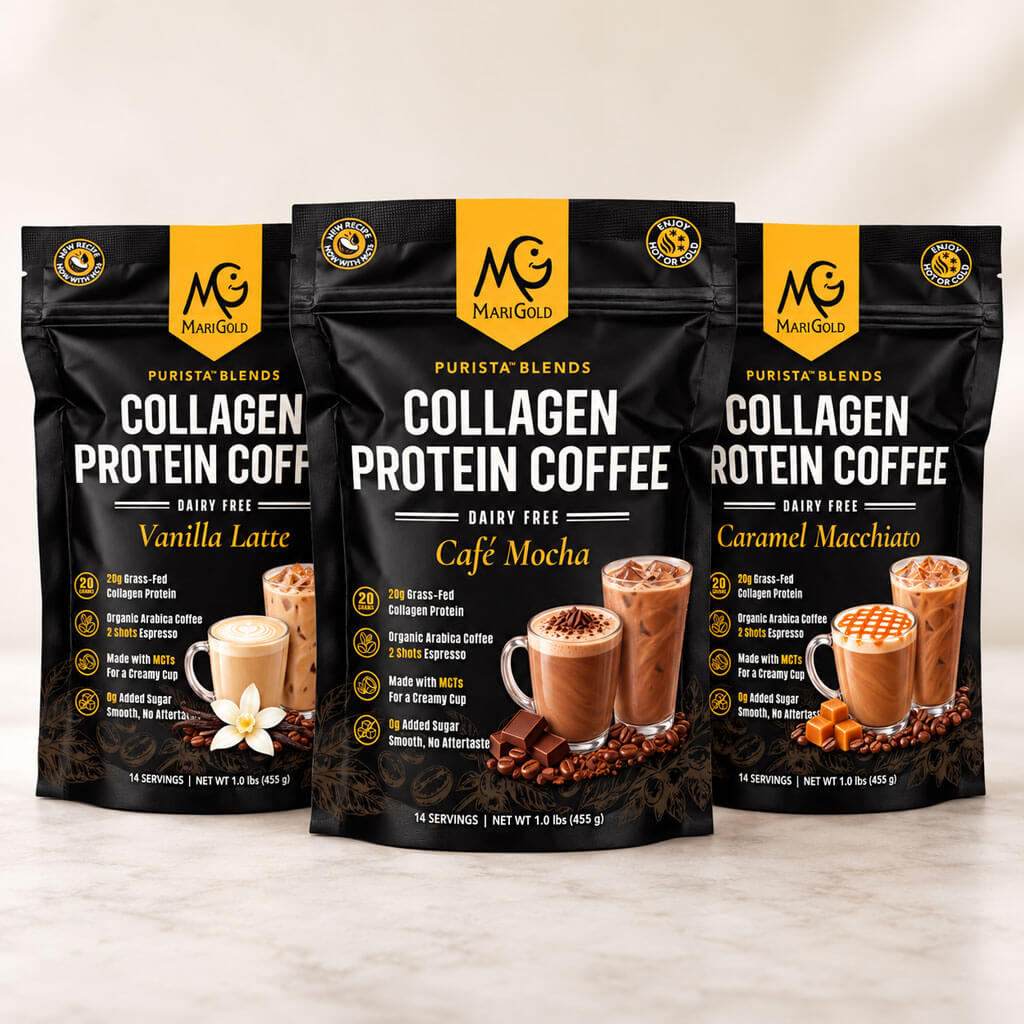
At MariGold, we believe your morning coffee should do more than taste amazing. It should be a delicious, nourishing way to start your day.
That’s why our Collagen Protein Coffees combine organic Arabica coffee, premium grass-fed collagen peptides, and 2.5 grams of coconut-derived MCTs per serving for a rich, creamy, and satisfying cup.
And here’s another reason to love your morning ritual: our collagen coffees are lactose-free and casein-free, making them a great option for those who want a creamy coffee experience without traditional dairy proteins or lactose. For people who have trouble digesting lactose, that can mean a more comfortable start to the morning.
With 20 grams of grass-fed collagen peptides, coconut-derived MCTs, and the delicious flavor of organic Arabica coffee, you’re getting more than your usual cup of joe. It’s a convenient way to add protein to your morning routine with ingredients selected for both nutrition and taste.
All the creamy coffee goodness you love, without the lactose or casein. Now that’s a pretty great way to start the day!
Sources and Further Reading
- He H, et al. (2024). The impact of medium-chain triglycerides on weight loss and metabolic health in individuals with overweight or obesity: A systematic review and meta-analysis. Clinical Nutrition.
- Minamida M, et al. (2026). Effect of Medium Chain Fatty Acids on Body Composition in Individuals with Overweight and Obesity: A Systematic Review and Meta-Analysis. Obesity Reviews.
- Medium-chain triglycerides may improve memory in non-demented older adults: A systematic review of randomized controlled trials (2022).
- Medium-Chain Triglycerides (MCTs) for the Symptomatic Treatment of Dementia-Related Diseases: A Systematic Review (2024).
- Alzheimer’s Drug Discovery Foundation. Medium Chain Triglycerides: Cognitive Vitality Review (2024).
- Cleveland Clinic. Potential Health Benefits of MCT Oil.
Educational note: This content is provided for general nutrition information and is not intended to diagnose, treat, cure, or prevent any disease. Research involving concentrated MCT supplements may not reflect the amounts present in individual food or beverage products.