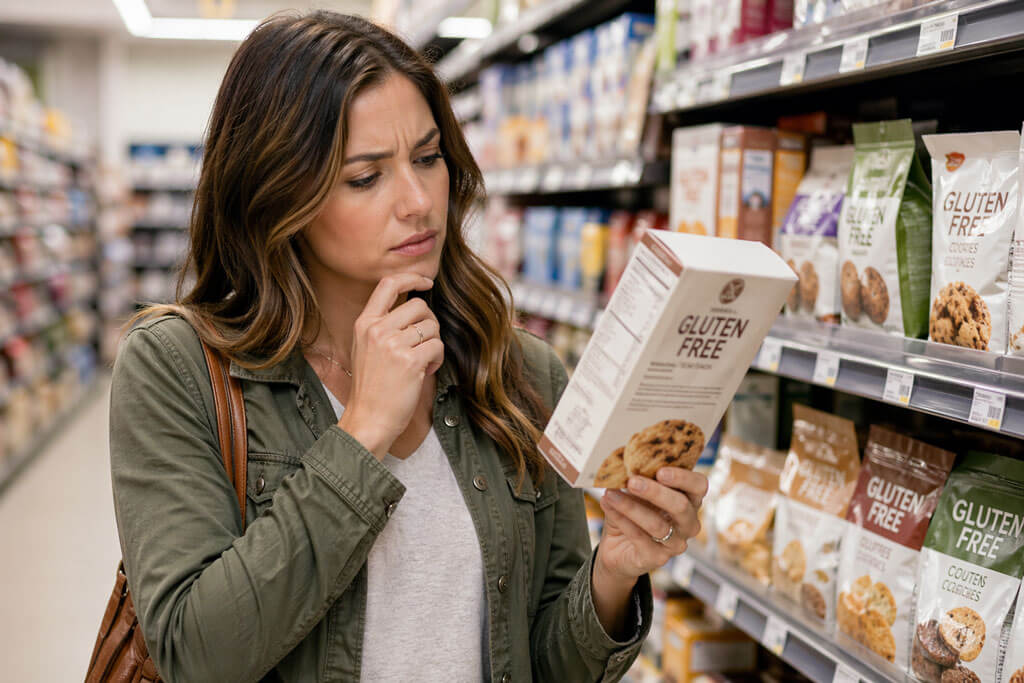
Walk through any grocery store in 2026 and you’ll see it everywhere—gluten-free labels on everything from cookies to pasta to protein bars.
For some people, going gluten-free is essential. But for many others, it’s become shorthand for “healthier”… and that’s where things get a little murky.
Because here’s the truth most people aren’t talking about:
Gluten-free doesn’t automatically mean better for your body.
The Gluten-Free Boom (and Why It’s Misleading)
Only about 1% of the population has celiac disease, yet a growing percentage of consumers—especially millennials and Gen Z—are choosing gluten-free foods for general wellness.
The problem?
The market responded fast… but not always well.
Many gluten-free products are:
- Highly processed
- Lower in protein
- Made with refined starches (like rice flour, tapioca starch, potato starch)
- Higher in sugar to compensate for taste
So while the label says “gluten-free,” the nutritional profile often tells a very different story.
The Real Issue Isn’t Gluten—It’s What Replaces It
When gluten is removed from food, something has to take its place.
And most of the time, that “something” is:
- Fast-digesting carbs
- Additives to improve texture
- Sugars to make it taste good
This can lead to:
- Blood sugar spikes
- Increased cravings
- Less satiety (you feel hungry sooner)
Which means you might actually end up eating more, not less.
Why Some People Do Feel Better Without Gluten
Now here’s where it gets interesting.
A lot of people report feeling less bloated or more energized when they cut out gluten—and that’s real.
But it may not be the gluten itself.
Often, removing gluten also means removing:
- Ultra-processed breads and snacks
- Certain FODMAPs that can trigger bloating
- Ingredients that irritate a sensitive gut
So the improvement isn’t just about gluten—it’s about reducing overall digestive stress.
Gluten-Free vs. Gut-Friendly: Not the Same Thing
This is where the conversation is shifting in 2026.
Instead of asking, “Is this gluten-free?”
A better question is: “Is this easy for my body to digest and actually nourishing?”
Gut-friendly foods tend to focus on:
- Balanced protein (for satiety and repair)
- Healthy fats (for stability and energy)
- Thoughtful carbs (that don’t spike blood sugar)
- Ingredients that support—not overwhelm—the microbiome
Because a gluten-free cookie is still… a cookie.
The Hidden Problem: Low Protein, High Cravings
One of the biggest issues with many gluten-free foods is what they lack—protein.
Without enough protein:
- Blood sugar becomes less stable
- Hunger returns faster
- Cravings increase (especially for sugar)
This is why simply swapping to gluten-free versions of the same foods often doesn’t lead to better results.
A Smarter Way to Approach Gluten-Free
If you feel better avoiding gluten, that’s valuable information. But instead of relying on packaged swaps, focus on building meals that are naturally supportive.
Think:
- Whole, simple ingredients
- Protein-forward choices
- Fats that help you stay full
- Minimal processing
In other words, shifting from “gluten-free products” → “real, supportive foods.”
Where MariGold Fits In
At the end of the day, the goal isn’t just removing something—it’s adding in what your body actually needs.
That’s where simple, high-quality proteins can make a big difference.
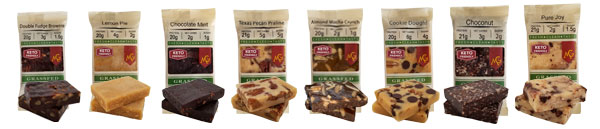
- Grass-fed Collagen Peptides support gut lining, skin, and recovery
- Whey Isolate Protein provides a clean, highly bioavailable protein source without unnecessary fillers
- Both are easy to incorporate into everyday routines—without relying on highly processed alternatives
And importantly, many MariGold products are made with clean, non-GMO ingredients, so you’re not trading one problem for another.
Gluten-free can be helpful for some—but it’s not a guarantee of better health.
The real shift happening right now isn’t just about removing gluten.
It’s about asking better questions:
- Is this nourishing?
- Is this easy to digest?
- Does this actually support how I feel?
Because when you focus on that, the label matters a whole lot less.