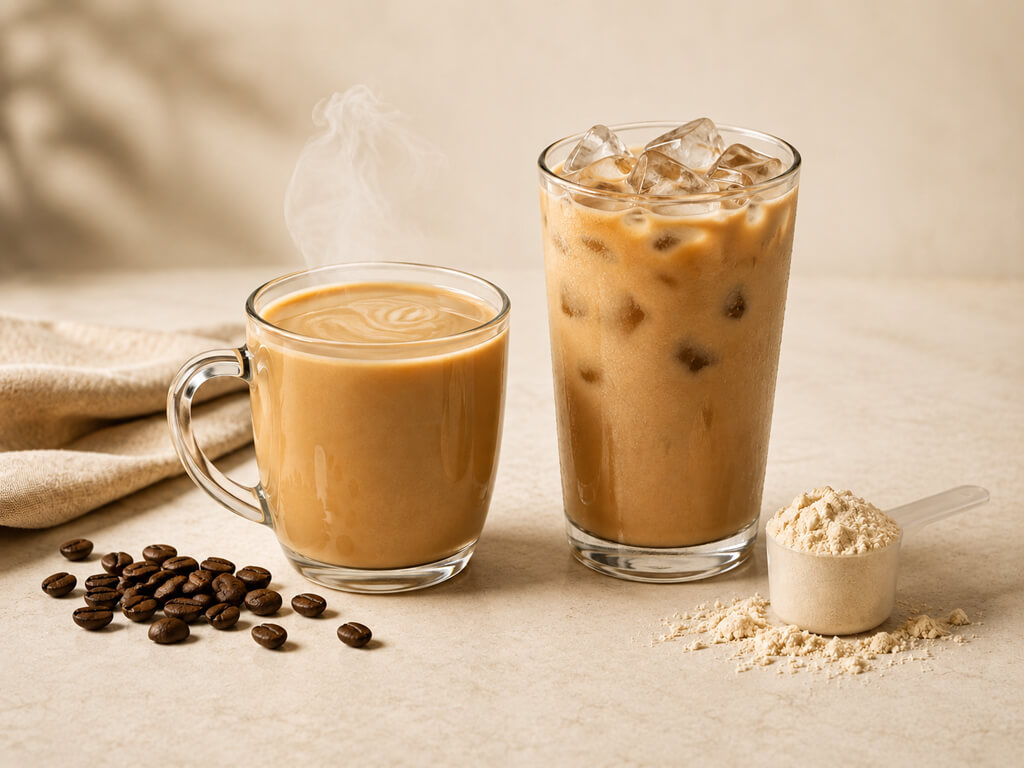
Protein coffee sounds simple enough: coffee + protein.
But once you start comparing products, things get a little more complicated.
One protein coffee may contain whey isolate. Another uses collagen. Some deliver a meaningful amount of protein, while others add just enough to put “protein” on the front of the package. Some start with actual coffee; others lean more heavily on coffee flavor. And then there are differences in sugar, sweeteners, caffeine, ingredients and how well the whole thing actually mixes.
So what makes a good protein coffee?
The best protein coffee combines coffee you genuinely enjoy drinking with a meaningful amount of protein that fits your nutritional goals. Look at the type and amount of protein, coffee source, caffeine level, sugar and sweeteners, ingredient list, and whether the product is designed to mix smoothly the way you prefer to drink it.
There isn’t one protein coffee that is automatically best for everyone. But there are a few things worth checking before you buy.
1. How Much Protein Is Actually in Your Protein Coffee?
First things first: turn the package around.
The words “protein coffee” don’t tell you how much protein you’re actually getting.
A product with a few grams of added protein and a product built around a substantial serving of protein may both use similar language on the front of the package, even though nutritionally they’re quite different.
How much you need at one time depends on your overall diet, body size, age, activity level and goals. For exercising adults, sports-nutrition guidance commonly uses approximately 20–40 grams of high-quality protein per serving as a general range for supporting muscle protein synthesis, although that isn’t a requirement that every snack or beverage needs to meet.
The bigger point is this:
Don’t assume the word “protein” means high protein. Check the Nutrition Facts panel.
Then think about how you’re using the drink.
If your protein coffee is simply an afternoon coffee with a little nutritional boost, you may have different priorities than someone using it after a workout or as part of a protein-rich breakfast.
2. What Kind of Protein Is Best in Coffee?
This may be even more important than the number on the label.
Two protein coffees can contain similar amounts of protein while providing very different amino-acid profiles.
Whey Protein Coffee
Whey is a high-quality dairy protein containing all nine essential amino acids. It is also naturally rich in the branched-chain amino acids, including leucine, that play an important role in muscle protein synthesis.
Whey protein isolate takes that one step further through additional filtration. Compared with less-filtered forms of whey, isolate generally contains a higher proportion of protein and less fat, carbohydrate and lactose.
That can make whey isolate protein coffee particularly appealing when your priorities include:
- Increasing your intake of complete protein
- Supporting an active lifestyle
- Adding protein around a workout
- Making breakfast more protein-forward
- Reaching a daily protein goal without adding another separate shake
Collagen Protein Coffee
Collagen peptides are different.
Collagen provides amino acids such as glycine and proline in a very different proportion than whey. However, collagen does not provide all of the essential amino acids in sufficient amounts and is therefore classified as an incomplete protein.
That doesn’t mean collagen has no place in your diet. It means collagen and whey shouldn’t automatically be treated as nutritionally interchangeable.
If your goal is specifically to add collagen peptides to something you’re already drinking every morning, collagen protein coffee can make that routine exceptionally simple.
Whey vs. Collagen Protein Coffee: Which Should You Choose?
| If your main priority is… | Consider |
|---|---|
| Adding complete protein | Whey isolate |
| Supporting muscle protein intake | Whey isolate |
| Increasing essential amino acid intake | Whey isolate |
| Adding collagen peptides to an existing routine | Collagen |
| A convenient alternative to mixing collagen separately into coffee | Collagen |
And you don’t necessarily have to choose one forever. The better option depends on what you want that particular cup of coffee to accomplish.
3. Check the Sugar—and the Sweeteners
A coffee drink can contain protein and still contain considerably more sugar than you expected.
That’s why it’s worth looking beyond the protein number and checking:
- Total carbohydrate
- Total sugars
- Added sugars
- Type of sweetener
- Serving size
This becomes particularly important with flavored coffees like mocha, vanilla and caramel, where sweetness is naturally part of the flavor profile.
A lower-sugar protein coffee can provide that café-style experience without turning your morning coffee into dessert in disguise.
Sweetener preference is more personal.
Some people prefer stevia. Others like allulose. Some don’t mind traditional sugar. Some specifically avoid sugar alcohols or certain artificial sweeteners.
There isn’t one sweetener everyone has to choose.
The better question is whether the product clearly tells you what is being used so you can make that decision for yourself.
4. Don’t Forget About the Coffee
Protein gets most of the attention, but there’s another fairly important ingredient here.
The coffee.
After all, if you wouldn’t enjoy drinking it without the word “protein” on the package, the novelty is probably going to wear off pretty quickly.
Look at what is actually supplying the coffee component.
Is the product made with coffee or coffee extract? Does the manufacturer identify the type of coffee? Is the flavor designed to taste like an actual latte, mocha or iced coffee—or more like a protein shake with coffee flavor added?
Neither approach is inherently wrong. But if protein coffee is replacing your usual morning cup, coffee quality matters.
MariGold Protein Coffees, for example, combine protein with organic Arabica coffee, so coffee isn’t an afterthought to the protein side of the formula.
Because ultimately, the best nutritional routine is not terribly useful if you dread drinking it.
5. Powdered Protein Coffee vs. Ready-to-Drink: Which Is Better?
This comes down mostly to how you use it.
Ready-to-drink protein coffee
The obvious advantage is convenience.
Grab it from the refrigerator, open it and you’re done. That can be useful for commuting, traveling or keeping something at work.
The tradeoff is that you’re buying a beverage that’s already mixed for you. The serving strength, coffee-to-protein ratio and volume are predetermined, and bottles or cans require more storage space than a powdered mix.
Powdered protein coffee
A powdered protein coffee requires one extra step—mixing it—but gives you considerably more flexibility.
Depending on the product, you may be able to:
- Adjust how much liquid you use
- Make it hot or iced
- Blend it with milk or a milk alternative
- Increase or decrease the coffee strength
- Keep several servings in a pantry or desk drawer
- Make a café-style drink without keeping bottles in the refrigerator
MariGold takes the powdered approach, combining the coffee and protein into a single mix rather than asking you to brew coffee and then experiment with adding a separate protein powder.
For anyone who has ever dumped protein powder into coffee and watched it form tiny floating protein dumplings, that distinction matters.
6. Can Protein Coffee Be Made Hot AND Iced?
Sometimes.
But don’t assume every protein coffee is equally good at both.
Temperature can change the way proteins behave in liquid, and preparation technique makes a noticeable difference—especially if you’re adding ordinary protein powder to coffee yourself.
Why does protein powder sometimes clump in hot coffee?
Proteins can change structure when exposed to heat. When protein powder hits very hot liquid all at once, it may be more difficult to disperse evenly.
A few tricks can help:
Mix first, heat second.
Blend the protein with a small amount of cooler liquid before adding very hot coffee.
Use a frother.
A handheld frother can disperse powder much more effectively than casually attacking it with a spoon.
Don’t pour boiling water directly onto protein powder.
Let extremely hot coffee cool slightly before mixing when appropriate.
Follow the directions for the specific product.
A protein coffee formulated as an instant drink may behave differently from a scoop of ordinary protein powder added to brewed coffee.
What about iced protein coffee?
Cold preparation has its own challenge: powders generally dissolve more slowly in very cold liquid.
Mixing the powder thoroughly before adding a full glass of ice—or using a shaker, blender or frother—can make a big difference.
If iced coffee is your daily default, look specifically for a product intended to work well cold rather than assuming any protein powder will cooperate.
7. How Much Caffeine Is in Protein Coffee?
Protein content and caffeine content are two completely separate numbers.
A drink can be high in protein and relatively low in caffeine—or have plenty of caffeine and only a modest amount of protein.
Check both.
This becomes even more important if you’re using multiple servings, drinking other coffee during the day, taking pre-workout products or getting caffeine from tea, energy drinks or other sources.
For most adults, the FDA cites 400 milligrams of caffeine per day as an amount not generally associated with negative effects, but individual sensitivity varies considerably. Pregnancy, medications, certain health conditions and other factors can change what’s appropriate for an individual.
In other words, don’t let the protein halo distract you from the fact that protein coffee is still coffee.
Quick Checklist: What Should You Look for in a Protein Coffee?
If you’re comparing protein coffees, start here:
- How much protein is in one serving?
- What type of protein does it contain?
- Is it a complete protein or collagen?
- What is the coffee source?
- How much caffeine is in a serving?
- How much added sugar does it contain?
- What sweeteners are used?
- What else is on the ingredient list?
- Can it be prepared hot, iced or both?
- Does the type of protein fit what you actually want from the drink?
- Most importantly: will you enjoy drinking it regularly?
A flashy front label can tell you that something contains coffee and protein.
Those questions tell you what you’re actually buying.
How Is MariGold Protein Coffee Different?
One reason we don’t think every protein coffee belongs in the same category is simple:
MariGold makes protein coffee with two different types of protein because whey isolate and collagen aren’t interchangeable.
MariGold Whey Isolate Protein Coffee
Our whey protein coffees combine grass-fed whey isolate with organic Arabica coffee in an instant coffee mix.
They’re designed for someone who wants their coffee to contribute meaningful complete protein—not simply a token amount added to a coffee drink.
Because whey contains all nine essential amino acids and is naturally rich in leucine, it’s an especially useful option when increasing complete dietary protein is the goal.
MariGold Collagen Protein Coffee
Our collagen protein coffees pair grass-fed Type I & III hydrolyzed collagen peptides with organic Arabica coffee.
Instead of stirring a separate scoop of collagen into your morning coffee, the collagen and coffee are already designed to be part of the same drink.
Different protein. Different nutritional purpose. Same basic idea:
If you’re already drinking coffee, make that cup work a little harder for you.
So, What Is the Best Protein Coffee?
The best protein coffee is the one that fits both your nutritional priorities and your actual coffee routine.
For complete protein and essential amino acids, whey isolate is a strong option. If specifically adding collagen peptides is your priority, collagen protein coffee may make more sense. Beyond protein type, compare the actual amount of protein, coffee source, caffeine, added sugar, sweeteners and ingredient list.
And then there’s the requirement no nutrition panel can answer:
Does it taste good enough that you’re going to look forward to tomorrow’s cup?
Because that’s the protein coffee most likely to become part of your routine.
Frequently Asked Questions About Protein Coffee
What is protein coffee?
Protein coffee is a beverage that combines coffee or coffee ingredients with a source of protein. Depending on the product, that protein may come from whey, collagen, milk protein, plant protein or another source.
What is the best protein coffee?
There isn’t one best protein coffee for everyone. Look for a product with an amount and type of protein that fits your goals, a coffee source you enjoy, reasonable sugar levels, clearly disclosed ingredients and a caffeine level appropriate for your routine.
How much protein should protein coffee have?
There is no required amount that makes a beverage “protein coffee.” Check the Nutrition Facts panel rather than relying on front-of-package wording. The amount that’s useful for you depends on how the drink fits into your meals and overall daily protein intake.
What protein is best for coffee?
Whey protein isolate is a complete, leucine-rich protein and can be useful when increasing complete dietary protein is the priority. Collagen peptides have a different amino-acid profile and may be preferred when the specific goal is adding collagen to an existing coffee routine.
Is whey protein or collagen better in coffee?
Neither is universally better. Whey is a complete protein that provides all nine essential amino acids, while collagen is an incomplete protein with a distinctly different amino-acid profile. Choose based on what you want from the drink.
Can you put protein powder in hot coffee?
Yes, although ordinary protein powders may clump when added directly to very hot liquid. Mixing with a small amount of cooler liquid first, using a frother and following the manufacturer’s preparation directions can improve texture.
What's the best protein for iced coffee?
Look for a protein or protein-coffee mix that disperses well in cold liquid. Whey isolate and collagen can both be used in iced coffee, although they provide different nutritional benefits.
Is protein coffee low in sugar?
Some protein coffees are low in sugar, but not all are. Check the Nutrition Facts panel for total and added sugars and read the ingredient list to see which sweeteners are used.
Does protein coffee have caffeine?
Usually, but caffeine amounts can vary substantially depending on the type and amount of coffee used. Check the product information rather than assuming all protein coffees provide the same caffeine level.
Can protein coffee replace breakfast?
Protein coffee can contribute protein and calories to breakfast, but coffee plus protein alone doesn’t necessarily provide all of the nutrients of a balanced meal. Depending on your needs, pair it with foods that provide fiber, healthy fats, carbohydrates, fruit, vegetables or other nutrients.
Ready to Find Your Protein Coffee?
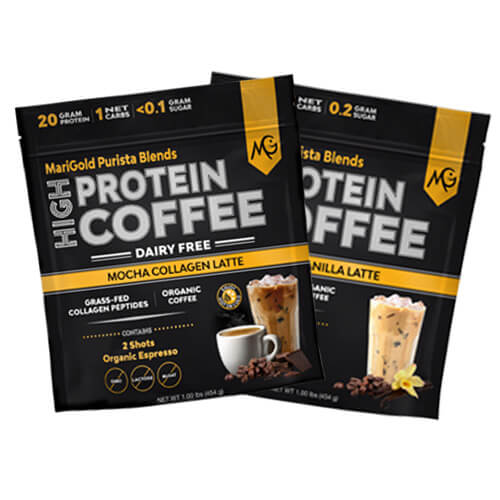
Whether you’re looking for complete protein from whey isolate or an easy way to add collagen peptides to your coffee routine, MariGold Protein Coffees are made with organic Arabica coffee and designed to make your morning cup do a little more.