Collagen supplements are everywhere – but not all collagen is created equal. Labels like grass-fed, pasture-raised, hydrolyzed, and collagen powder get tossed around as if they’re interchangeable. They’re not.
If you’re using collagen for gut health, joint support, skin elasticity, or metabolic support, the source, processing, and amino acid profile matter far more than most marketing copy suggests.
Let’s break down what actually separates grass-fed collagen peptides from conventional collagen powders -and why those differences show up in real-world results.
First: What Is Collagen, Really?
Collagen is the most abundant protein in the human body, forming the structural framework of:
- Skin and connective tissue
- Tendons and ligaments
- Bone matrix
- Gut lining
- Blood vessels
Dietary collagen provides a unique amino acid profile that cannot be replicated by muscle meat proteins like whey, egg, or plant proteins.
The most critical amino acids include:
- Glycine – supports gut lining integrity, sleep quality, detoxification, and nervous system balance
- Proline & Hydroxyproline – essential for connective tissue repair and skin elasticity
Most people consuming a modern diet are chronically low in glycine, even if protein intake looks adequate on paper.
Collagen Powder vs. Collagen Peptides: Processing Matters
Not all collagen powders are peptides.
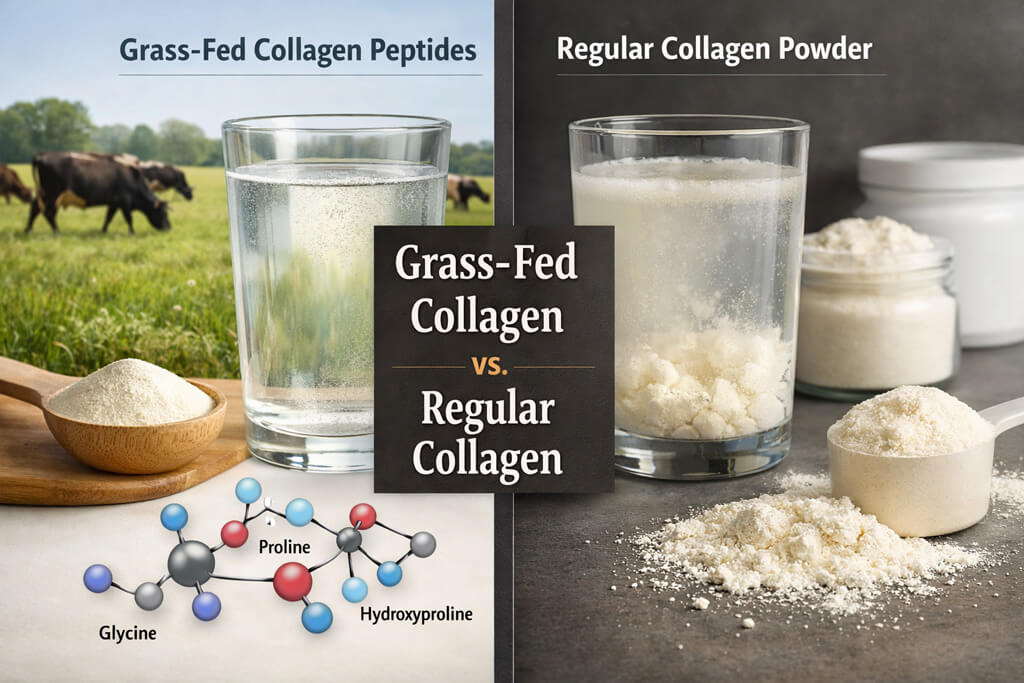
Regular Collagen Powder
- Often minimally processed
- Larger protein chains
- Slower and less complete digestion
- Can clump, gel, or cause GI discomfort
Collagen Peptides (Hydrolyzed Collagen)
- Enzymatically broken into smaller peptides
- Higher bioavailability
- Faster absorption in the small intestine
- Clinically studied form used in most research
From a physiological standpoint, collagen peptides are the form your body can actually use efficiently.
What Makes Grass-Fed Collagen Different?
Here’s where the real divergence begins.
1. Source Animal Diet Changes the Final Protein
Grass-fed collagen comes from cattle raised primarily on pasture rather than grain-based feedlots. That difference impacts:
- Fat-soluble nutrient content
- Inflammatory residue exposure
- Environmental toxin load
While collagen itself is a protein, it can carry trace compounds from the animal’s environment – especially if sourced from skin, hide, and connective tissue.
Grass-fed sourcing reduces the likelihood of:
- Antibiotic residues
- Growth hormone exposure
- Feed-related endotoxins
2. Amino Acid Integrity & Balance
Grass-fed collagen peptides tend to show more consistent amino acid ratios, particularly:
- Glycine
- Proline
- Hydroxyproline
These ratios matter because collagen’s benefits are not about “protein grams” – they’re about specific amino acid signaling that supports tissue repair and inflammation balance.
3. Lower Inflammatory Burden
Conventionally raised cattle are more likely to be exposed to:
- Pro-inflammatory omega-6–heavy feed
- Stress hormones that can affect tissue quality
- Environmental contaminants concentrated in connective tissue
For individuals with:
- Gut permeability
- Autoimmune conditions
- Chronic joint inflammation
- Skin issues
these subtle differences can influence tolerance and outcomes.
Absorption: Why Peptides + Source Work Together
Studies on hydrolyzed collagen peptides show that di- and tri-peptides (not individual amino acids) circulate in the bloodstream after ingestion.
These peptides act as signals, stimulating:
- Fibroblast activity in skin
- Chondrocyte function in cartilage
- Repair processes in connective tissue
Grass-fed sourcing doesn’t change digestion – but it improves what’s being absorbed.
Think of it as the difference between clean building materials vs. questionable ones. Your body still builds – but the quality matters.
Gut Health & the Collagen Connection
One of collagen’s most underappreciated roles is gut barrier support.
Glycine and proline are essential for:
- Tight junction integrity
- Mucosal lining repair
- Reducing endotoxin (LPS) translocation
When collagen is poorly sourced or inadequately processed, people often report:
- Bloating
- Nausea
- “Heavy” digestion
High-quality grass-fed collagen peptides are typically better tolerated, especially when consumed daily.
Skin, Hair & Joint Claims: What Actually Holds Up?
The strongest evidence supports collagen peptides for:
- Skin elasticity and hydration
- Joint pain reduction (especially in active adults)
- Tendon and ligament recovery
What matters most:
- Consistency (daily intake)
- Peptide form
- Adequate vitamin C intake (cofactor for collagen synthesis)
Grass-fed peptides don’t magically create collagen – but they provide the cleanest, most usable raw materials.
Grass-fed collagen peptides are not hype – but they are specific.
They differ from conventional collagen powders in:
- Processing (peptides vs. intact protein)
- Source quality
- Inflammatory load
- Tolerance and absorption efficiency
If collagen is part of a long-term health strategy – especially for gut health, skin integrity, or joint resilience – the details matter more than the label size.
If collagen is part of your routine, quality shouldn’t be optional.
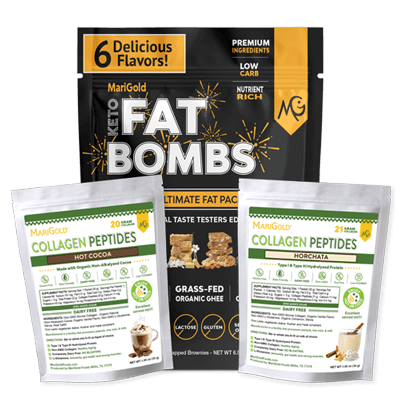
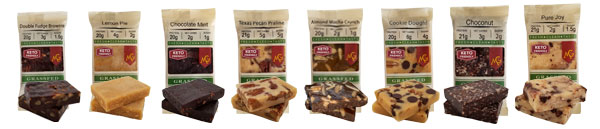
MariGold’s Grass-fed Collagen Peptides are hydrolyzed for optimal absorption and come in five flavors designed to fit real life – not just a label. From morning smoothies to afternoon snacks, they’re an easy way to support joints, skin, and gut health daily.
For those who love convenience, our Collagen Coffee blends clean protein with organic coffee for a balanced start. And our Fat Bombs, made with collagen peptides and healthy fats, turn collagen into something you actually look forward to eating.
Simple ingredients. Thoughtful sourcing. No shortcuts.