If you’ve spent any time in longevity circles, you’ve probably heard this claim:
“Low protein diets reduce IGF-1 and lower cancer risk.”
It’s usually followed by the conclusion that eating less protein is the key to living longer.
But when you actually read the study being referenced, the story becomes much more nuanced — and far more interesting.
Let’s take a closer look at what the research really says about protein for aging & longevity.
The Study Everyone Quotes (But Rarely Explains Fully)
The study most often referenced analyzed protein intake in adults and looked at associations with IGF-1 levels, cancer risk, and mortality.
Here’s the part that gets shared everywhere:
- In adults under 65, high protein intake was associated with higher IGF-1 levels and increased mortality risk.
That’s usually where the conversation stops.
But it shouldn’t.
Because what the study found in adults over 65 tells a very different story.
The Over-65 Group: A Completely Different Outcome
In adults 65 and older, higher protein intake was associated with:
- Lower overall mortality
- Better preservation of lean muscle mass
- Improved health outcomes compared to low-protein peers
This is the part that rarely gets discussed.
The data suggest that protein needs are not static across your lifespan. What may be appropriate at 40 is not necessarily appropriate at 70.
That’s a major shift in how we think about protein for aging & longevity.
Why Muscle Is a Longevity Organ
As we age, one of the biggest predictors of healthspan isn’t cholesterol alone or even blood sugar — it’s muscle mass.
Loss of muscle (sarcopenia) is strongly associated with:
- Increased fall risk
- Reduced insulin sensitivity
- Frailty
- Loss of independence
- Higher mortality
Muscle isn’t just about strength or appearance. It’s metabolically active tissue that:
- Improves glucose disposal
- Supports mitochondrial function
- Regulates inflammation
- Acts as a reservoir for amino acids during illness
Preserving lean mass is one of the most powerful strategies for extending healthspan.
And adequate protein intake is essential for that.
What About IGF-1?
IGF-1 (Insulin-Like Growth Factor 1) often gets framed as the villain in longevity discussions because elevated levels have been linked to certain cancers.
But context matters.
IGF-1 is also involved in:
- Tissue repair
- Muscle growth
- Bone density
- Cellular regeneration
Chronically elevated IGF-1 in midlife may carry different implications than modest increases in older adults who are trying to prevent muscle wasting.
This is why blanket statements like “protein shortens lifespan” are misleading.
The relationship between protein, IGF-1, and longevity appears to be age-dependent.
Age-Appropriate Protein Intake
Emerging research suggests that:
- Moderate protein intake may be appropriate in midlife.
- Higher protein intake becomes increasingly protective after age 65.
- Quality and digestibility matter as much as total grams.
Older adults also experience something called anabolic resistance — meaning their bodies require more protein to stimulate muscle protein synthesis compared to younger adults.
In other words, the aging body doesn’t respond to protein as efficiently.
That makes adequate intake even more important.
The Quality Question: Not All Protein Is Equal
When discussing protein for aging & longevity, quality matters.
High-quality protein sources provide:
- A complete amino acid profile
- Sufficient leucine to trigger muscle protein synthesis
- High bioavailability
- Easy digestibility
This is particularly important for aging digestion, which often produces less stomach acid and digestive enzymes.
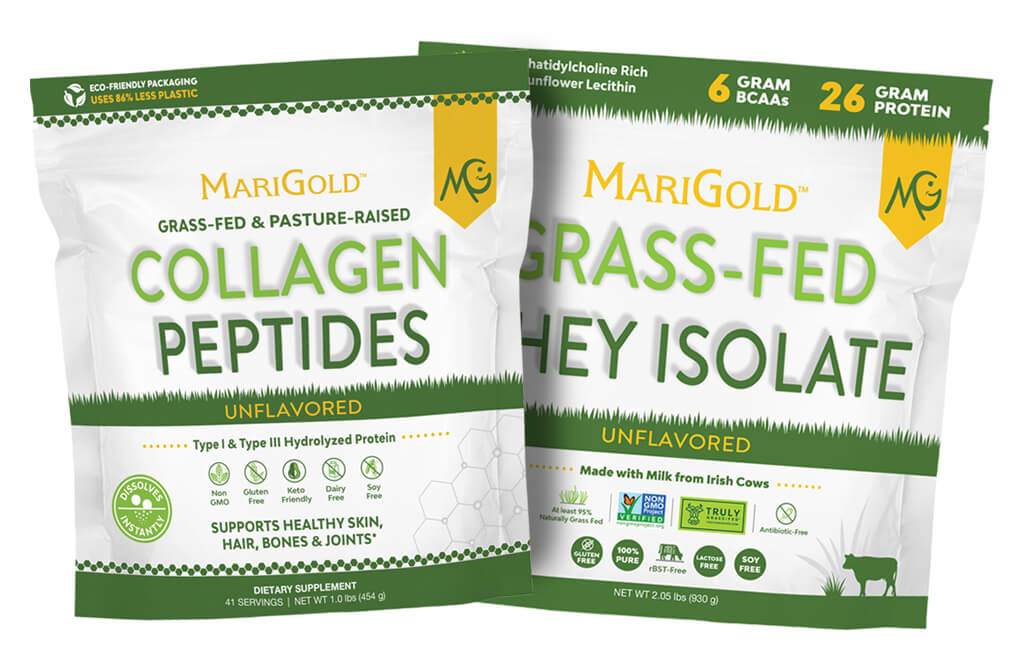
Collagen peptides, for example, provide glycine and proline — amino acids that support connective tissue, joint health, skin integrity, and recovery. While not a complete muscle-building protein on their own, they play a valuable supportive role in mobility and structural integrity.
Whey isolate, on the other hand, is rich in leucine and highly bioavailable, making it efficient for stimulating muscle protein synthesis.
Both serve different purposes within a longevity-focused strategy.
Protein Is Not the Enemy — Inactivity Is
One of the biggest oversights in the low-protein longevity narrative is that protein does not act in isolation.
Muscle is built and preserved through:
- Resistance training
- Mechanical load
- Adequate recovery
- Sufficient amino acid availability
Without stimulus, protein alone won’t preserve muscle. But without protein, stimulus doesn’t work efficiently.
Longevity isn’t about restricting your way to frailty.
It’s about maintaining strength, mobility, and resilience over time.
So What Does This Mean for You?
If you’re under 65:
- Focus on balanced, moderate protein intake.
- Prioritize strength training.
- Avoid chronically excessive intakes far beyond your needs.
If you’re over 65:
- Protein becomes increasingly protective.
- Preserving muscle mass should be a priority.
- Slightly higher protein intake may support longevity rather than harm it.
The key takeaway?
Protein for aging & longevity is not a one-size-fits-all conversation.
It’s about timing.
It’s about context.
And it’s about preserving the tissues that keep you strong, stable, and independent.
When you zoom out and read the full study, the message isn’t “eat less protein.”
It’s this:
Support muscle as you age.
Protect lean mass.
Think long-term strength — not short-term fear.
Because in the longevity conversation, strength may be one of the most underrated biomarkers of all.
Referenced Article: https://www.sciencedirect.com/science/article/pii/S155041311400062X
Support Muscle. Protect Mobility. Age Strong.
As protein needs shift with age, quality becomes even more important.
Our cold-processed Grass-Fed Whey Isolate supports muscle protein synthesis.
Our Collagen Peptides help maintain connective tissue and joint integrity.
Our Protein Coffee makes hitting your daily target simple and convenient.
Fuel the tissues that keep you moving.