Cocoa butter is one of those ingredients most people recognize, but few fully understand. It’s often associated with chocolate, skincare, or indulgence – yet its role as a nutritional fat is rarely discussed.
What’s surprising is that cocoa butter can exist in very different forms nutritionally, depending on how it’s processed. And while labels like organic and food-grade are helpful, they don’t always tell the whole story.
When it comes to fats, processing matters just as much as sourcing.
Unrefined cocoa butter offers a compelling example of how minimal processing can preserve natural compounds that support metabolic health, inflammation balance, and even satisfaction from food – while more heavily refined versions quietly lose much of that value.
What Cocoa Butter Actually Is
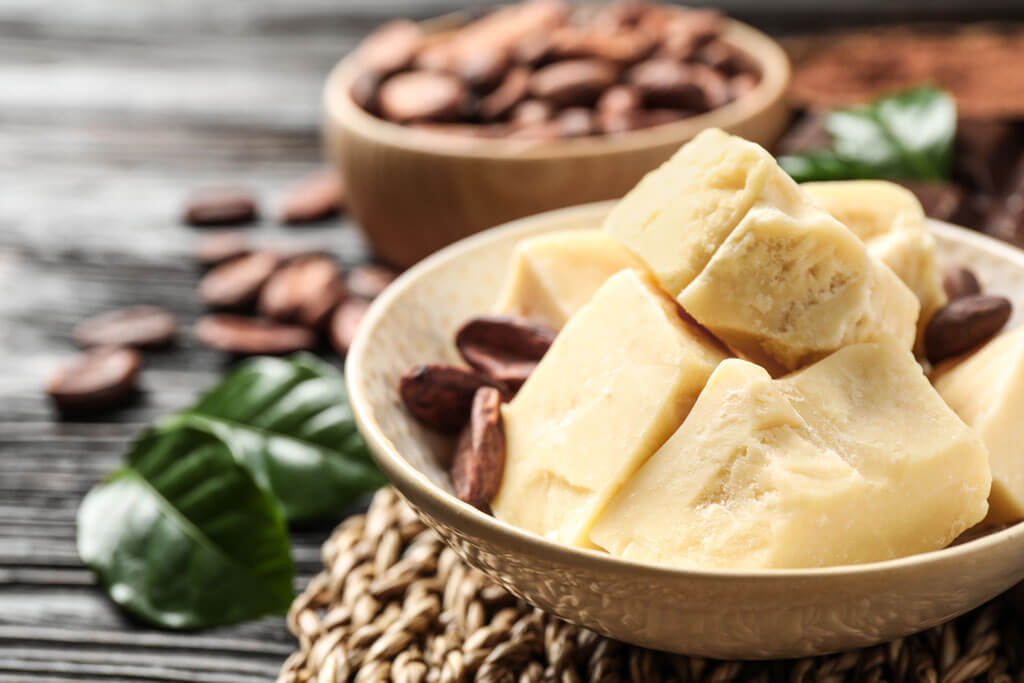
Cocoa butter is the natural fat extracted from cacao beans. It’s solid at room temperature, melts smoothly at body temperature, and has a fatty acid profile that makes it uniquely stable compared to many modern cooking fats.
But once cocoa butter is extracted, it can be processed in different ways – and that’s where meaningful differences emerge.
The Three Types of Cocoa Butter You’ll See
1. Unrefined (Non-Deodorized) Cocoa Butter
Unrefined cocoa butter is gently pressed and minimally processed. It retains:
- Natural cocoa polyphenols and flavonoids
- A light cocoa aroma and golden hue
- Naturally occurring volatile compounds
Because it avoids high-heat deodorizing, unrefined cocoa butter keeps much of its original integrity – nutritionally and sensorially. This makes it especially well-suited for functional foods where the goal is nourishment, not neutrality.
2. Refined, Food-Grade Cocoa Butter
Refined, food-grade cocoa butter is safe for consumption and commonly used in cooking and baking. It undergoes additional processing to improve consistency, color, and shelf stability.
While still a quality fat, refining reduces some naturally occurring antioxidants and aromatic compounds. Compared to unrefined cocoa butter, it offers less nutritional depth, though it remains a better choice than heavily processed alternatives.
Refined does not mean bad – it simply means less intact.
3. Deodorized Cocoa Butter
Deodorized cocoa butter is processed using high-heat steam distillation to remove scent, color, and flavor entirely. This creates a neutral, shelf-stable fat commonly used in cosmetics or applications where flavor is undesirable.
From a nutritional standpoint, deodorizing strips away most beneficial compounds, leaving a fat that’s functional but largely stripped of its original value.
Why Processing Changes the Nutrition
High-heat processing doesn’t just affect aroma – it alters the nutritional profile.
Unrefined cocoa butter retains more naturally occurring antioxidants, including polyphenols that help combat oxidative stress and support cardiovascular health. These compounds are sensitive to heat, which is why refined and deodorized versions contain far less.
This difference matters most when fats are used regularly. Small nutrient losses, repeated over time, quietly add up.
A Closer Look at Cocoa Butter’s Fat Profile
Cocoa butter’s fatty acid composition is one of its most compelling qualities:
- Stearic acid – a saturated fat shown to have a neutral effect on LDL cholesterol
- Oleic acid – a heart-supportive monounsaturated fat also found in olive oil
- Palmitic acid – naturally occurring and balanced within the fat matrix
Unlike many seed oils, cocoa butter is oxidatively stable, meaning it’s less likely to break down into inflammatory byproducts when stored or used properly.
When this stability is paired with retained antioxidants – as in unrefined cocoa butter – the result is a fat that supports metabolic health rather than working against it.
Antioxidants, Inflammation & Heart Health
Cocoa is well known for its antioxidant content, but cocoa butter is often overlooked in this conversation.
While cocoa butter doesn’t contain antioxidants at the same concentration as cacao powder, unrefined cocoa butter still retains meaningful amounts, especially compared to deodorized versions.
These compounds are associated with:
- Reduced oxidative stress
- Support for healthy blood vessel function
- Inflammation balance
The takeaway isn’t that cocoa butter is a superfood – it’s that choosing a less processed version preserves benefits that refined options simply no longer provide.
Flavor, Aroma & Satisfaction Matter Too
Nutrition isn’t only biochemical – it’s sensory.
Unrefined cocoa butter carries a subtle, natural cocoa aroma that refined versions lack. This matters because aroma and flavor play a role in satiety. Foods that smell and taste like real food tend to feel more satisfying, which can reduce the urge to over-consume or chase sweetness.
Neutral fats don’t provide that same feedback.
Sometimes, satisfaction itself is part of nourishment.
Cocoa Butter Types: What the Labels Really Mean
For eating and functional foods, processing matters just as much as sourcing.
| Feature | Unrefined Cocoa Butter | Food-Grade Cocoa Butter | Deodorized Cocoa Butter |
|---|---|---|---|
| Flavor & Aroma | Light natural cocoa scent | Mild to neutral | Neutral |
| Antioxidants | Naturally retained | Partially reduced | Largely removed |
| Processing | Minimal, low-heat | Refined for consistency | High-heat steam distillation |
| Best Use | Eating, functional foods | General cooking & baking | Cosmetics, neutral applications |
| Nutritional Value | Highest | Moderate | Lowest |
Organic certification matters — but minimal processing is what preserves cocoa butter’s true nutritional value.
Choosing Cocoa Butter with Intention
If cocoa butter is part of your diet, the most important factors to look for are:
- Labeled unrefined or non-deodorized
- Food-grade quality
- Minimal processing (no bleaching or chemical refining)
- Proper storage to protect stability
Cocoa butter is calorie-dense, so quality matters far more than quantity.
A Thoughtful Shift Toward Better Fats
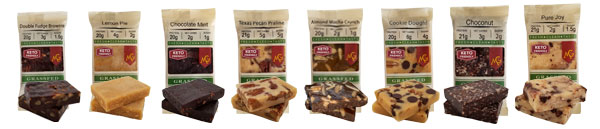
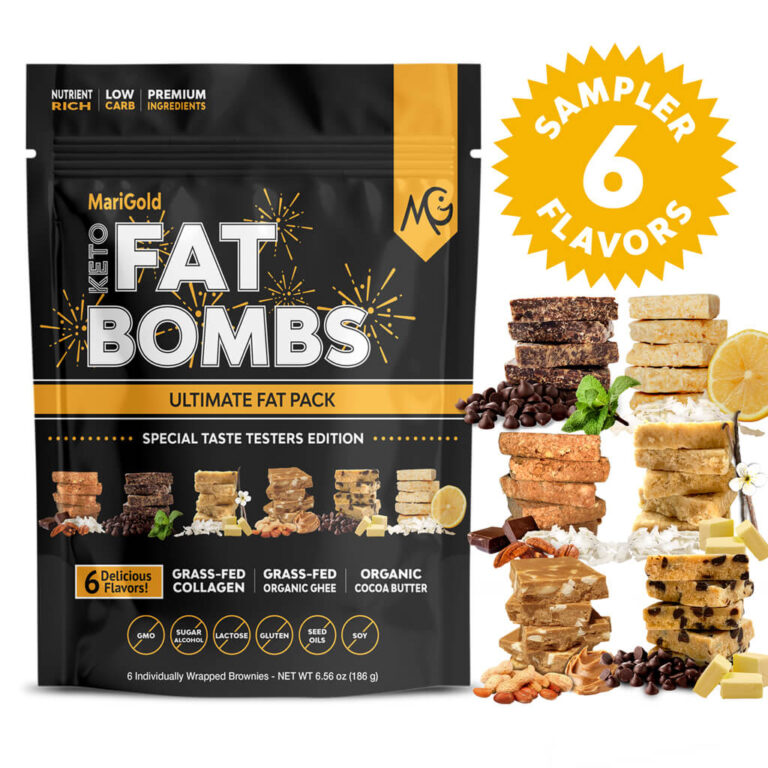
At MariGold, ingredient decisions aren’t made for trend appeal – they’re made with long-term nourishment in mind. That’s why we’ve transitioned all of our Fat Bombs to unrefined cocoa butter.
This shift preserves natural antioxidants, enhances flavor, and aligns with our belief that fats should do more than just “hold things together.” They should support the body in meaningful ways.
Unrefined cocoa butter isn’t about indulgence.
It’s about choosing fats that remain close to their original form – nutritionally, structurally, and sensorially.
When fats are minimally processed, the body recognizes them differently. And over time, those choices quietly matter.
A Thoughtful Way to Enjoy Better Fats
If cocoa butter is part of your routine, choosing an unrefined version helps preserve what makes it valuable in the first place – naturally occurring antioxidants, a stable fat profile, and the subtle cocoa aroma that contributes to satisfaction and satiety.
That’s why our Fat Bombs are made with unrefined cocoa butter, along with thoughtfully selected fats and collagen to support steady energy, blood sugar balance, and a more grounded sense of fullness. They’re designed to be an easy, real-food option – whether you’re looking to curb cravings, extend time between meals, or add nourishing fats without overthinking ingredients.
No fillers. No artificial sweeteners.
Just simple, functional fats that work with your body – not against it.
For those who care about ingredient integrity and how foods are processed, it’s a small detail that makes a meaningful difference.