Different countries don’t just eat differently. They regulate differently.
Scroll social media for five minutes and you’ll see it:
- “This ingredient is banned in Europe.”
- “This food isn’t allowed in Japan.”
- “Canada won’t accept this product.”
It’s easy to dismiss those headlines as sensational. But underneath the noise is a real, important question:
Why do different countries look at the same ingredients – and make different decisions?
This isn’t about fear.
It’s about standards.
And it’s about understanding how food policy actually works.
Because when dozens of countries restrict or prohibit something that’s still widely sold in the United States, it’s fair to ask:
What do they see that we don’t?
The U.S. vs. The “Precautionary Principle”
One of the biggest differences comes down to regulatory philosophy – and how precaution is applied.
The European Union formally incorporates what’s known as the precautionary principle into its food safety framework. In practice, this means that when credible scientific uncertainty exists – especially around long-term or cumulative effects – regulators may restrict or remove an ingredient while more data is gathered.
The United States also uses precaution in certain areas, particularly in pesticide tolerances and environmental policy. However, in food additive regulation, the system tends to rely more heavily on quantitative risk assessment – meaning regulators evaluate whether typical exposure levels have been shown to cause harm.
In many cases, an ingredient remains allowed unless evidence demonstrates that it exceeds established safety thresholds.
So the difference isn’t that one system cares and the other doesn’t.
It’s that they weigh uncertainty differently.
- The EU may act when potential risk cannot be ruled out.
- The U.S. often acts when measurable risk has been demonstrated at expected exposure levels.
Neither approach is automatically “right.” But they can lead to noticeably different ingredient standards – and different grocery store shelves.
And when you start looking at ingredients that are restricted or banned in Europe, Canada, or parts of Asia – but still widely allowed in the U.S. – a deeper question emerges:
What are they concerned about?
Let’s look at a few examples.
Atrazine (Used on U.S. Corn)
What it is:
Atrazine is a herbicide widely used on corn and other crops in the U.S.
Why some countries restricted/banned it:
The European Union withdrew approval for atrazine largely due to groundwater contamination concerns and environmental persistence. It was frequently detected above allowable limits in water systems.
Potential concerns:
Some research has linked atrazine exposure to:
- Endocrine disruption (hormone interference)
- Reproductive effects in animals
- Developmental concerns in amphibians and wildlife
The concern isn’t that eating corn causes immediate harm. It’s about long-term, low-level environmental and cumulative exposure.
Why the U.S. still allows it:
U.S. regulators maintain that when used according to label directions, exposure levels remain within acceptable safety margins.
rBST / rBGH (Growth Hormone in Dairy)
What it is:
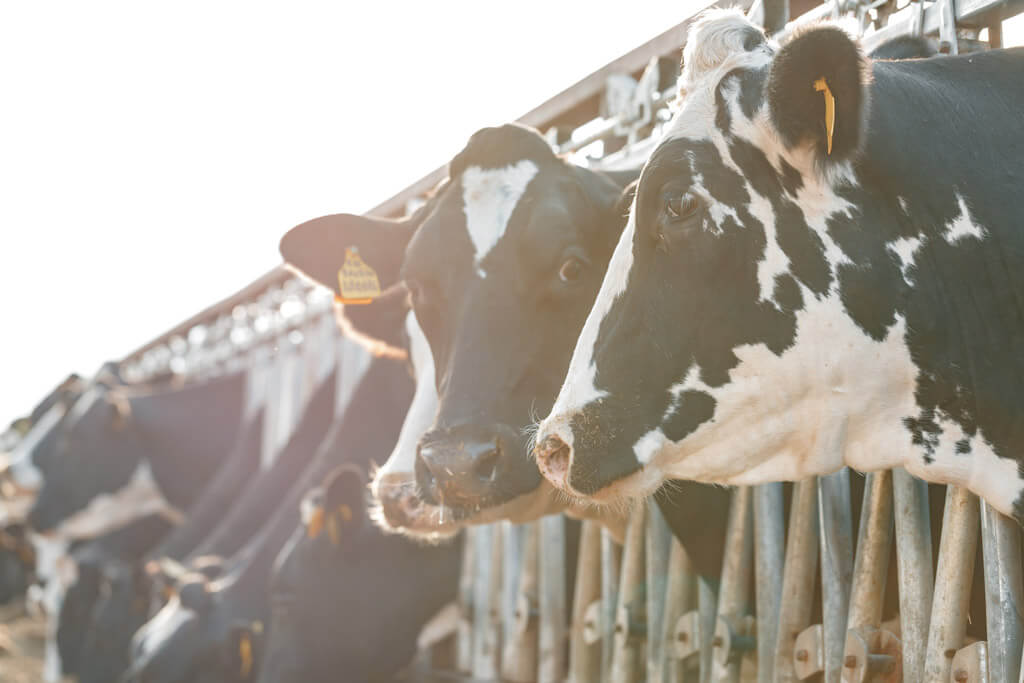
Recombinant bovine somatotropin is a synthetic hormone used to increase milk production in dairy cows.
Why it’s not permitted in the EU and Canada:
European regulators cited:
- Animal welfare concerns (increased mastitis and infection risk in cows)
- Secondary concerns about antibiotic use
Potential human health discussion:
The FDA maintains milk from treated cows is safe for consumption. However, critics have raised concerns about:
- Elevated IGF-1 levels (a growth factor linked in some research to certain cancers)
- Increased antibiotic use contributing to antibiotic resistance
The debate isn’t black-and-white. It reflects different levels of precaution.
Ractopamine (Used in Pork Production)
What it is:
A feed additive used to promote lean muscle growth in pigs.
Why it’s restricted in the EU, China, and others:
Regulators cited:
- Residue concerns in meat
- Potential cardiovascular effects at higher exposures
- Insufficient long-term safety data
The EU applies a zero-tolerance policy for ractopamine residues.
Why the U.S. allows it:
The FDA determined that approved residue limits are safe for human consumption. Interestingly, many U.S. pork producers remove ractopamine when exporting to countries that prohibit it – showing reformulation is feasible.
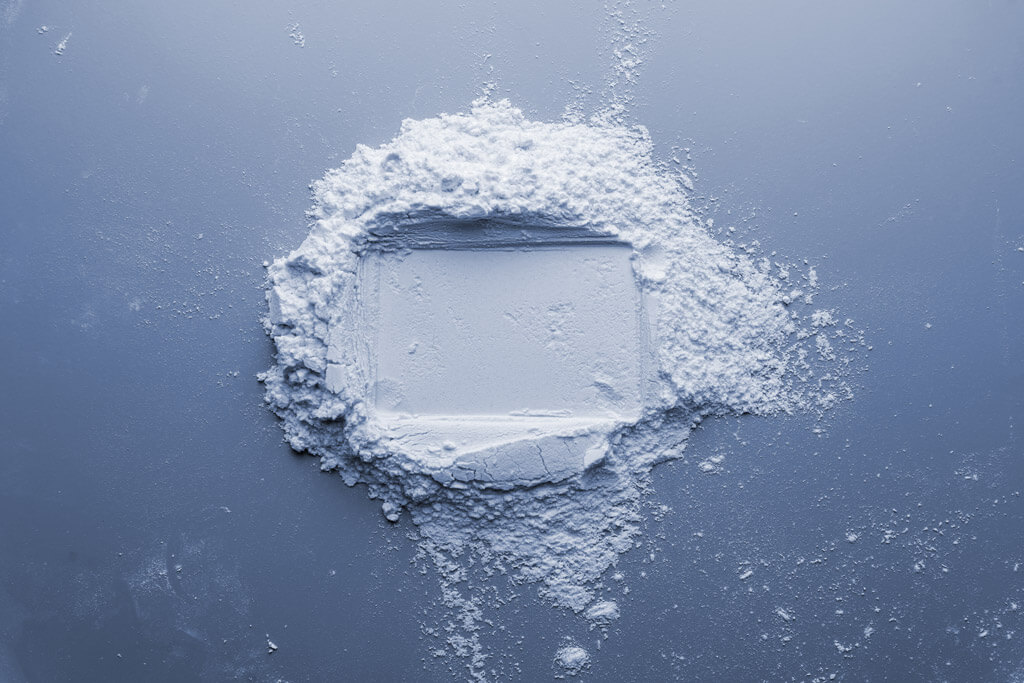
Titanium Dioxide (E171)
What it is:
A whitening agent used in candies, baked goods, and processed foods.
Why the EU banned it (2022):
The European Food Safety Authority concluded that titanium dioxide could no longer be considered safe as a food additive due to concerns about genotoxicity – meaning it may potentially damage DNA.
The key word: uncertainty.
Under the precautionary principle, uncertainty plus potential DNA impact was enough to remove it from the food supply.
Why it’s still allowed in the U.S.:
The FDA has not issued the same determination and continues to allow its use within regulated limits.
Potassium Bromate (Used in Some Bread Products)
What it is:
A flour improver that strengthens dough and improves texture in baked goods.
Why it’s restricted/banned in many countries:
Potassium bromate has been classified as a possible human carcinogen based on animal studies showing kidney and thyroid tumors at certain doses.
Because of this, countries including members of the EU and others have banned or restricted it.
Why it’s allowed in the U.S.:
The FDA allows it in specific concentrations, stating that when used properly it converts to bromide during baking. Many commercial bakeries have voluntarily eliminated it – but it remains legal.
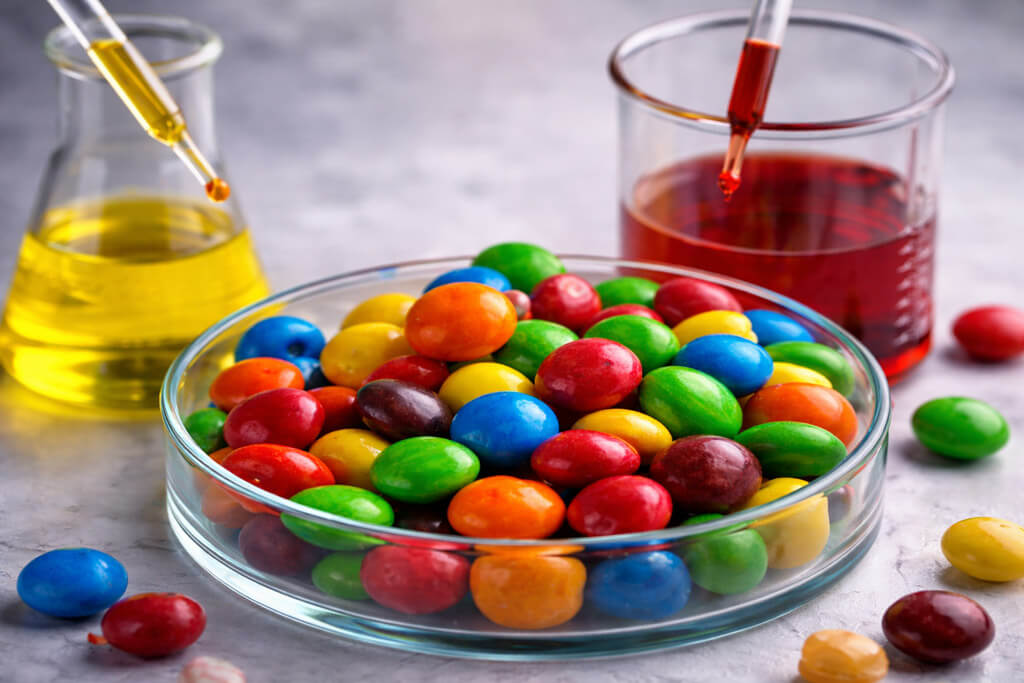
Artificial Food Dyes (Yellow 5, Yellow 6, Red 40)
What they are:
Synthetic petroleum-derived color additives used in candies, beverages, cereals, and snacks.
Why Europe handles them differently:
The EU requires warning labels on certain artificial colors due to research suggesting potential links to hyperactivity in children. Some formulations are different overseas.
Potential concerns include:
- Behavioral effects in sensitive children
- Allergic reactions in some individuals
- Ongoing debate about long-term safety
The U.S. allows these dyes but regulates their use and approved quantities.
The Bigger Question
Notice a pattern?
In many cases:
- The U.S. allows an ingredient within defined limits.
- The EU removes it when there is scientific uncertainty.
- Companies reformulate when required.
This isn’t necessarily about one country being reckless and another being perfect. It’s about risk tolerance.
- How much uncertainty is acceptable?
- How much cumulative exposure is considered reasonable?
- How much environmental impact is weighed?
Those are policy decisions.
What This Means for You
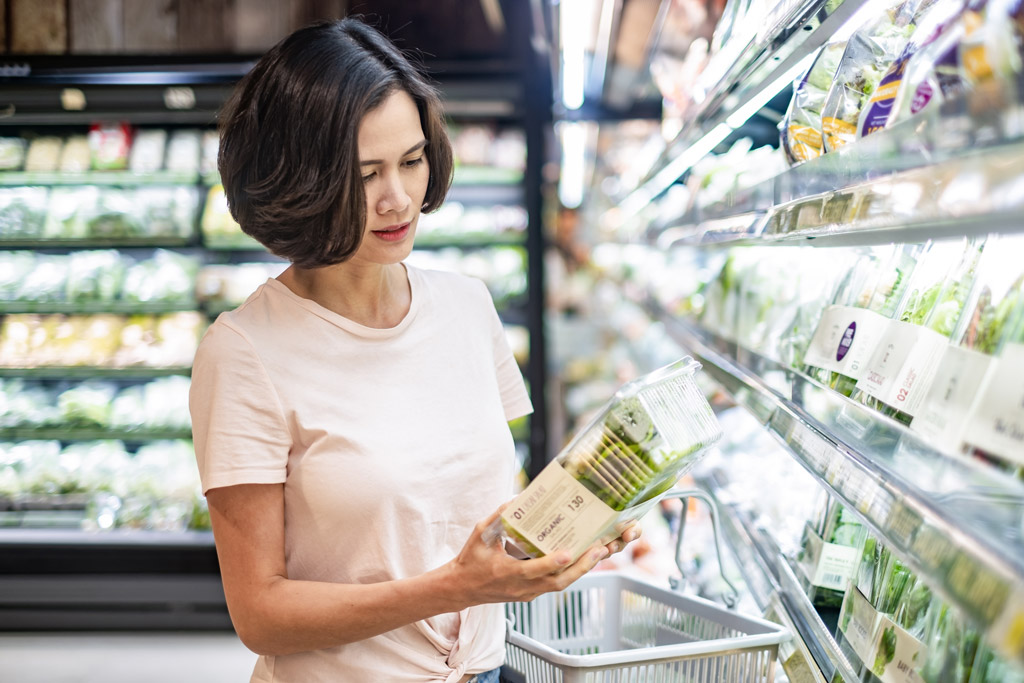
You don’t need to panic. You don’t need to throw out your pantry. But awareness changes behavior in subtle ways. If a product can be made without a controversial additive – and is made that way in other developed nations – it’s reasonable to ask why we’re not choosing that version by default.
The Food Shift isn’t about fear. It’s about:
- Shorter ingredient lists
- Fewer synthetic additives
- More transparency
- And questioning long-standing norms
Because health shifts rarely happen overnight. They happen slowly – through daily choices. And policy often shifts only when consumers start asking better questions.
So we’re curious, if you found out an ingredient in a product you eat regularly is restricted or banned in other developed countries…
- Would that change how often you buy it?
- Would you look for a reformulated version?
- Or would you want stronger evidence before making a shift?
Do you think the U.S. should adopt a more precautionary approach like the EU? Or do you trust our current regulatory framework as it stands?
There’s no single “right” answer here. Awareness grows stronger when conversations happen.
We’d genuinely love to hear where you stand.
Higher Standards. Fewer Ingredients.
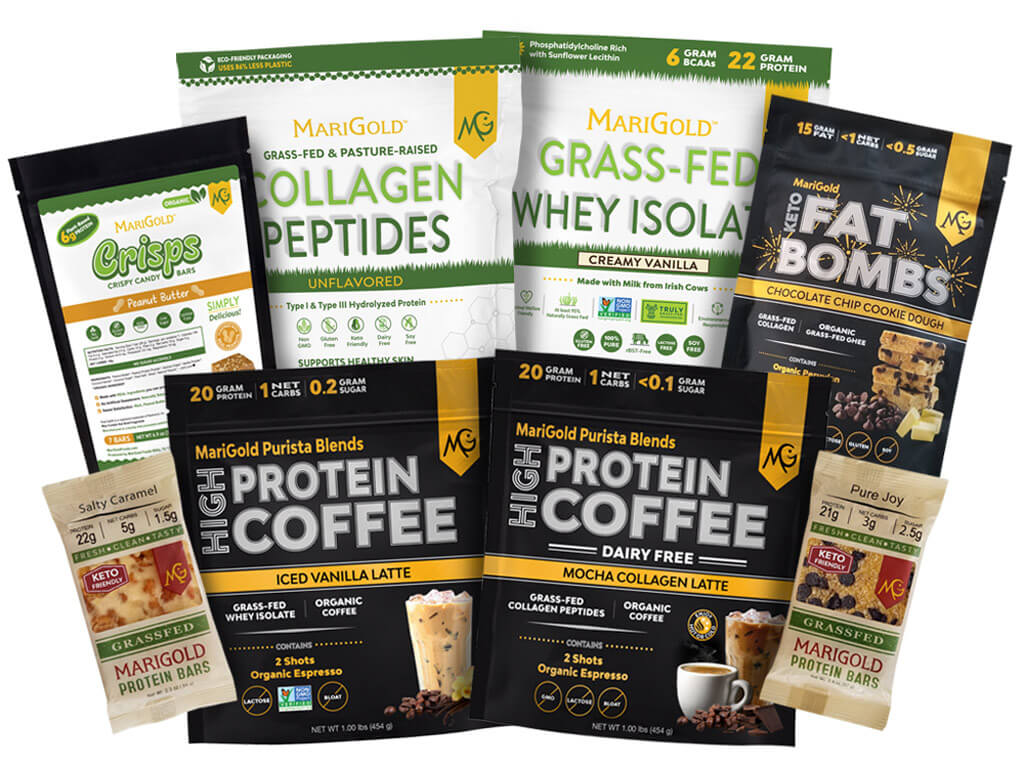
If reading ingredient labels feels overwhelming, that’s exactly why we keep ours simple.
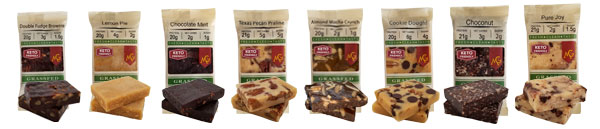
At MariGold, we don’t use artificial dyes, controversial preservatives, growth hormones, or unnecessary additives — not because they’re trendy to avoid, but because simpler formulations are possible.
If you’re ready for protein products made with ingredients you can recognize — and feel good about — we’re here for that!