For years, collagen was mostly marketed as a beauty supplement — something associated with smoother skin, stronger nails, or fewer wrinkles.
But lately, the conversation around collagen has started to shift.
Researchers studying aging, recovery, metabolism, inflammation, and even sleep are taking a much broader interest in collagen and one of its most abundant amino acids: glycine.
Why?
Because aging isn’t just about how we look. It’s also about how well our bodies repair, recover, move, and maintain structural integrity over time.
And modern diets may be missing more of these “structural proteins” than many people realize.
The Protein Imbalance Hidden in Modern Diets
Most modern diets are heavily centered around muscle meats — chicken breast, steak, turkey, protein powders, egg whites, and other lean proteins.
Those foods are valuable, of course. But historically, humans consumed far more than just muscle tissue.
Traditional diets often included:
- Skin
- Tendons
- Connective tissue
- Bone broth
- Slow-cooked meats
- Cartilage-rich cuts
These foods are naturally rich in collagen and glycine.
Today, many people eat a very different amino acid profile than humans did historically — one that’s often high in methionine from muscle meats, but relatively low in glycine-rich connective tissue.
That imbalance has caught the attention of some longevity researchers because amino acid balance may influence recovery, oxidative stress, and how the body handles aging over time.
In other words, the discussion is no longer just:
“How much protein are you eating?”
It’s increasingly:
“What kinds of amino acids are missing from modern diets?”
Why Glycine Is Suddenly So Interesting
Glycine may not sound exciting, but it plays a surprisingly important role in the body.
It’s involved in:
- Collagen production
- Glutathione synthesis (one of the body’s major antioxidants)
- Nervous system regulation
- Detoxification pathways
- Sleep and relaxation signaling
- Tissue repair and recovery
Glycine also acts as an inhibitory neurotransmitter, meaning it may help support a calmer nervous system — one reason researchers have explored its connection to sleep quality and nighttime recovery.
Some studies suggest glycine may help support:
- Better sleep quality
- Temperature regulation during sleep
- Recovery from oxidative stress
- Cellular repair processes
While collagen itself isn’t a magic anti-aging solution, the broader conversation around glycine and structural proteins has become much more sophisticated than the old “beauty supplement” narrative.
Aging Is Structural, Too
When people think about aging, they often think about wrinkles first.
But aging also affects:
- Tendons
- Ligaments
- Fascia
- Joints
- Muscle recovery
- Skin elasticity
- Bone structure
- Connective tissue resilience
Over time, the body’s natural collagen production declines. Recovery often becomes slower. Injuries can linger longer. Skin loses elasticity. Muscle maintenance becomes more difficult.
In many ways, aging is partly a structural process.
That’s one reason collagen has gained attention beyond aesthetics. Researchers and health-conscious consumers alike are becoming more interested in supporting the body’s connective tissue systems before major decline occurs.
Oxidative Stress, Recovery & Mitochondrial Health
Another reason glycine has entered longevity discussions is its relationship to oxidative stress and cellular recovery.
Modern life places enormous stress on the body:
- Chronic stress
- Poor sleep
- Ultra-processed foods
- Blood sugar swings
- Environmental toxins
- Sedentary lifestyles
- Overtraining
All of these factors can contribute to oxidative stress — essentially an imbalance between free radicals and the body’s ability to neutralize them.
Glycine is one of the building blocks needed to produce glutathione, often called the body’s “master antioxidant.”
That doesn’t mean collagen is a cure-all for aging. But it does help explain why researchers studying resilience and recovery are looking more closely at amino acids involved in repair systems.
Longevity is increasingly viewed as more than just lifespan. It’s about maintaining function, mobility, recovery capacity, and metabolic resilience as we age.
Collagen, Muscle Loss & Healthy Aging
One criticism of collagen is that it’s not a “complete protein” like whey isolate.
That’s true.
Collagen is lower in branched-chain amino acids like leucine, which are important for directly stimulating muscle protein synthesis.
But that doesn’t mean collagen lacks value.
Instead, many experts now view collagen and whey as complementary rather than competing proteins.
Whey isolate excels at:
- Muscle protein synthesis
- Lean muscle support
- Recovery after exercise
- Satiety
Collagen may help support:
- Connective tissue
- Tendons and joints
- Skin structure
- Glycine intake
- Recovery systems
For healthy aging, both muscle tissue and connective tissue matter.
Strong muscles attached to weakened connective tissue still create limitations over time.
That’s one reason many longevity-focused individuals now combine collagen with other high-quality proteins instead of viewing it as an either/or decision.
Why Longevity Experts Talk About Collagen Differently Than Fitness Influencers
Fitness culture often focuses on:
- Maximum muscle gain
- Fast physical transformation
- Protein quantity
- High-performance aesthetics
Longevity conversations tend to focus more on:
- Recovery
- Resilience
- Mobility
- Structural integrity
- Nervous system balance
- Long-term metabolic health
That shift changes how collagen is viewed.
Instead of asking:
“Will collagen build maximum muscle?”
The better question may be:
“Does modern nutrition provide enough structural support for long-term recovery and healthy aging?”
That’s a much bigger conversation.
What To Look For in a Collagen Product
Not all collagen products are created equally.
Quality can vary significantly depending on:
- Sourcing
- Processing methods
- Added ingredients
- Sweeteners and fillers
- Transparency standards
A high-quality collagen peptide product should ideally include:
- Grass-fed sourcing
- Hydrolyzed collagen peptides for easy mixing
- Minimal ingredients
- No excessive sugars or artificial fillers
- Transparent labeling
Many people also choose to pair collagen with nutrient-dense foods, balanced protein intake, healthy fats, and stable blood sugar habits for a more comprehensive approach to healthy aging.
The Bigger Picture on Longevity
Longevity isn’t just about living longer.
It’s about maintaining the structures that allow you to move well, recover efficiently, sleep deeply, stay active, and remain resilient as the years go on.
And that’s why collagen is no longer being discussed only in the beauty aisle.
Researchers, health practitioners, and longevity-focused consumers are increasingly viewing collagen — and especially glycine — as part of a much larger conversation about structural health, recovery, and aging well in a modern world.
Sometimes the most important nutrients aren’t the trendiest ones.
They’re the ones modern diets slowly forgot.
Your daily protein routine doesn’t have to feel complicated.
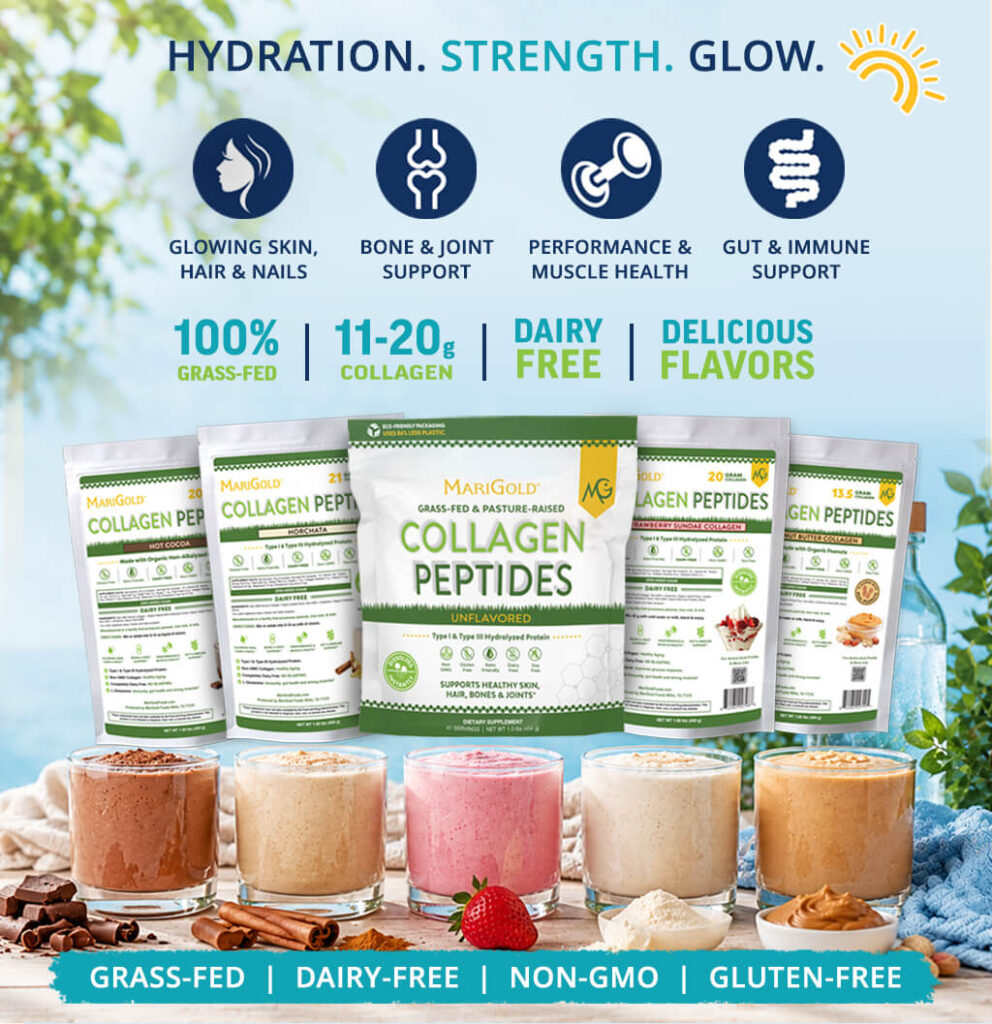
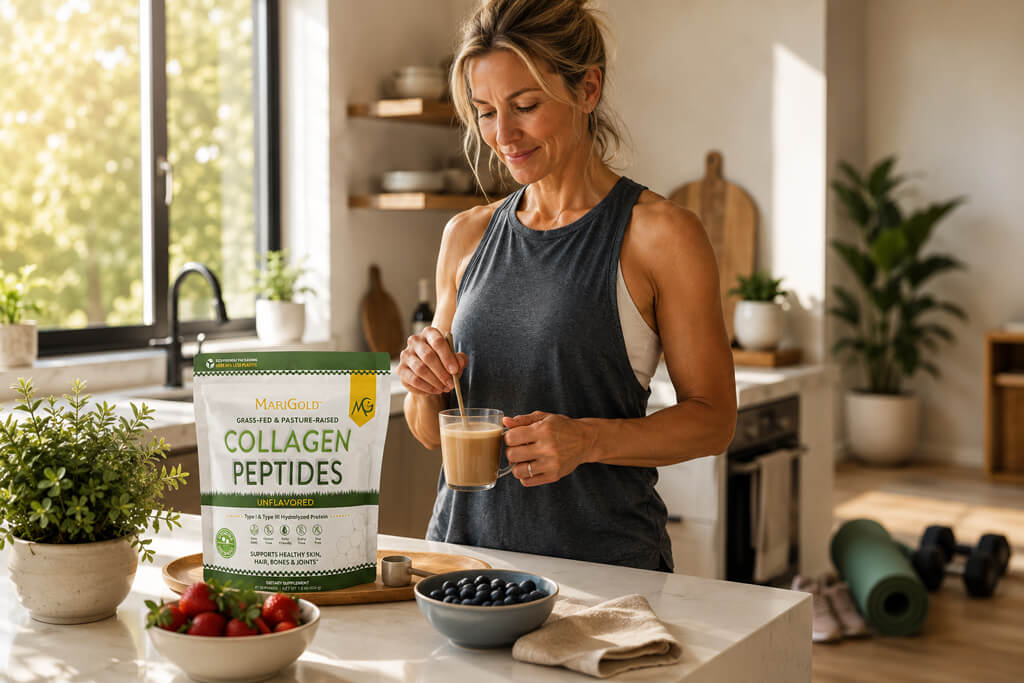
Whether you blend it into smoothies, stir it into coffee, or add it to your favorite recipes, MariGold Grass-Fed Collagen Peptides make it easy to support skin, joints, gut health, and recovery with clean, simple ingredients.
Looking for an even easier upgrade? Our Collagen Protein Coffees combine grass-fed collagen with real organic arabica coffee for a smooth, energizing way to start the day — without the sugar crash.