Mention protein and most people immediately picture muscles.
That association is not wrong. Protein supplies amino acids your body uses to maintain, repair, and build muscle tissue. But focusing only on muscle leaves out most of the story.
Protein is present in every cell of the body. Its building blocks help form tissues, create enzymes, support immune defenses, produce chemical messengers, and carry out much of the day-to-day work required to keep your body functioning. In fact, proteins are essential to the structure, function, and regulation of your tissues and organs.
Much of this work happens quietly. You do not feel an enzyme speeding up a chemical reaction or notice your body replacing worn-out structural proteins. Nevertheless, these jobs continue around the clock.
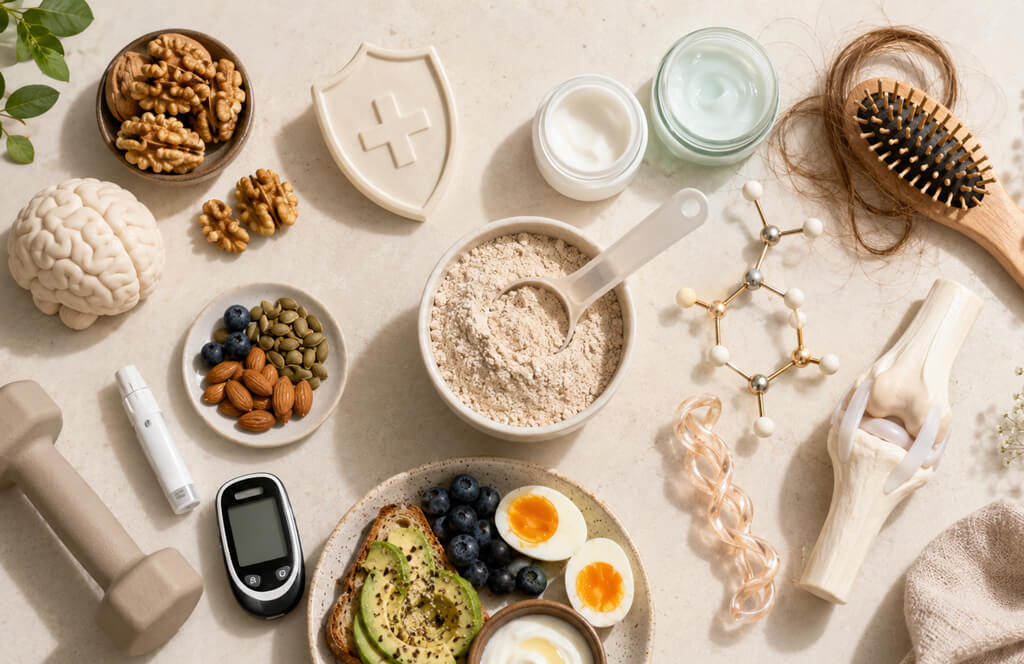
So, what does protein do for your body besides help build muscle? Here are seven important jobs it handles behind the scenes.
First, What Happens After You Eat Protein?
The protein in food cannot simply travel from your plate directly into your muscles, skin, or hair.
During digestion, your body breaks dietary protein down into smaller peptides and individual amino acids. Those amino acids are absorbed and added to the body’s available amino acid pool.
Your cells can then rearrange them into the specific proteins they need.
Think of amino acids as individual building pieces. The same general collection of pieces can be assembled into very different finished products, including:
- Muscle proteins
- Collagen
- Keratin
- Enzymes
- Antibodies
- Hormones
- Transport proteins
There are 20 amino acids commonly used to construct proteins in the human body. Your body can make some of them, but nine are considered essential because they must come from food.
Once those amino acids are available, the real behind-the-scenes work begins.
1. Protein Helps Repair and Replace Body Tissues
Your tissues are not permanent structures. Cells become damaged, proteins wear out, and older material must continually be broken down and replaced.
Protein supplies the amino acids needed for this ongoing maintenance.
This includes recovering from obvious physical stress, such as exercise, injury, or surgery. It also includes the less noticeable turnover that takes place every day in your muscles, organs, connective tissues, skin, and other cells.
Protein synthesis is a fundamental part of tissue repair. When dietary protein is inadequate, the body has fewer incoming amino acids available to support all the rebuilding projects competing for those materials.
This is one reason protein matters even when you are not trying to gain muscle and have not recently completed a strenuous workout. Your body still has maintenance work to do.
Muscle maintenance matters outside the gym
Muscle is often discussed in terms of appearance or athletic performance, but it also supports balance, mobility, metabolic health, and the ability to remain independent as you get older.
Starting in adulthood, maintaining muscle becomes increasingly important. Age-related losses in muscle mass and strength can affect physical function, especially when low activity and inadequate nutrition occur together. Adequate protein combined with appropriately challenging movement—particularly resistance exercise—helps support the body’s ongoing muscle-building and repair processes.
The goal is not necessarily to become more muscular. Sometimes the goal is simply to preserve what you already have.
2. Protein Creates Enzymes That Keep Reactions Moving
Your body is constantly carrying out chemical reactions.
It breaks food down, releases energy from nutrients, copies DNA, disposes of cellular waste, builds new molecules, and regulates countless other processes. Without help, many of these reactions would happen far too slowly to sustain life.
That help comes from enzymes—and most enzymes are proteins.
Enzymes act as biological catalysts. They make chemical reactions happen more efficiently without being permanently used up in the process. Proteins help catalyze reactions throughout metabolism and are involved in nearly every aspect of cellular function.
Digestive enzymes are an easy example. Different enzymes help break carbohydrates, fats, and proteins into smaller components your body can absorb and use.
But digestion is only one small part of enzyme activity. Enzymes also help your body:
- Produce cellular energy
- Build and repair DNA
- Manage oxidative stress
- Activate or deactivate other molecules
- Build neurotransmitters and hormones
- Break down substances the body no longer needs
You may never think about these reactions while they are happening, but your health depends on them continuing all day, every day.
3. Protein Helps Your Cells Communicate
Your body is not simply a collection of separate organs. It is a communication network.
Cells must continually send and receive instructions about what to do, when to do it, and when to stop. Proteins participate at nearly every stage of that communication.
Some hormones are proteins or peptides made from chains of amino acids. Insulin is one familiar example. It communicates with cells about managing glucose in the bloodstream.
Other proteins act as receptors on the surface of cells. A hormone or signaling molecule can bind to the receptor, much like a key fitting into a lock. That interaction delivers a message to the cell and may trigger a series of events inside it.
Proteins also help regulate gene expression, cellular growth, metabolism, and programmed cell death. Their role is not limited to forming body structures; they actively help determine how cells behave.
This is an important distinction: protein is both building material and working machinery.
4. Protein Supports Your Immune Defenses

Your immune system relies heavily on proteins.
Antibodies, also called immunoglobulins, are specialized proteins. They recognize particular targets—such as components of bacteria or viruses—and help the immune system respond to them.
Immune function also depends on enzymes, receptors, signaling molecules, and structural proteins that help immune cells communicate, multiply, travel, and perform their jobs. Antibodies and many of the molecules directing immune activity are made from amino acids.
This does not mean that consuming an extra protein shake will instantly “boost” immunity. The immune system is far more complex than any single food or nutrient.
It does mean that adequate nutrition, including sufficient protein, gives the body materials it needs to maintain immune cells and produce protein-based defenses.
When the body is recovering from illness, injury, or another major physical stressor, protein needs may also increase because immune activity and tissue repair both require resources.
5. Protein Helps Build Skin, Hair, Nails, and Connective Tissue
Skin, hair, and nails are sometimes treated as cosmetic concerns, but they are made from highly functional structural materials.
Keratin is a tough structural protein found in hair, nails, and the outer layers of skin. Collagen is a major structural protein in skin, bones, tendons, ligaments, cartilage, and other connective tissues.
Collagen gives tissues structure and tensile strength. It helps them resist stretching and provides a framework around which cells and other tissue components are organized.

Your body can produce collagen using amino acids, particularly glycine, proline, and hydroxyproline. Vitamin C and several other nutrients are also involved in collagen formation, which is a good reminder that protein works as part of a broader nutritional system—not in isolation.
Dietary collagen peptides provide a concentrated source of collagen-derived amino acids. Once consumed, however, collagen is still digested into smaller peptides and amino acids. Your body determines where those materials are used; they do not travel directly to one wrinkle, joint, or strand of hair.
Collagen and complete proteins serve different purposes
Collagen is protein, but it is not considered a complete protein because its essential amino acid profile differs from proteins such as whey, eggs, meat, or dairy.
Whey isolate provides all nine essential amino acids and is particularly rich in amino acids associated with muscle protein synthesis. Collagen peptides provide a different amino acid profile, with high amounts of glycine and proline-related amino acids commonly found in connective tissue.
That does not make one universally better than the other. They are simply different tools.
MariGold Grass-Fed Whey Isolate can be useful when the goal is adding a complete, highly concentrated protein source. MariGold Grass-Fed Collagen Peptides offer an easy way to add collagen-derived protein to coffee, oatmeal, yogurt, smoothies, and recipes without substantially changing their flavor.
Depending on your goals, both may fit into the same overall eating pattern.
6. Protein Provides Building Blocks for Brain Messengers
The connection between protein and the brain is more indirect than many “brain food” headlines suggest, but it is still important.
Certain amino acids are used as starting materials for neurotransmitters—the chemical messengers nerve cells use to communicate.
For example:
- Tryptophan is involved in serotonin production.
- Tyrosine is used in pathways that produce dopamine and norepinephrine.
- Glutamate functions as a neurotransmitter and is also related to the production of GABA.
Individual amino acids can function as neurotransmitters, hormones, or modulators of physiological processes. Other nutrients, including vitamin B6, are also required for several neurotransmitter-production pathways.
This does not mean that eating more of one amino acid automatically creates a dramatic mood or focus change. Neurotransmitter production is tightly regulated, and many factors influence how amino acids are transported, converted, and used.
Still, dietary protein contributes the raw materials involved in these pathways. That is one more reason the brain cannot be separated from the rest of the body’s nutritional needs.
7. Protein Can Help Make Meals More Satisfying and Steady
Protein’s final job on this list happens partly before its amino acids are used to build anything.
Protein changes how a meal feels.

Compared with a meal made primarily from rapidly digested carbohydrates, adding protein can slow the overall eating and digestive experience, increase fullness, and help a meal feel more sustaining.
Protein also stimulates several signals involved in satiety. This may help explain why a breakfast containing meaningful protein often feels different from one built entirely around a pastry, sweetened cereal, or plain toast.
Protein does not directly “cancel out” carbohydrates, and blood-sugar responses vary based on the entire meal, portion size, individual metabolism, activity, sleep, and other factors. However, pairing protein with carbohydrate-rich foods may produce a steadier experience than eating quickly digested carbohydrates by themselves. Harvard’s Nutrition Source notes that protein has a gentler effect on blood sugar than rapidly digested carbohydrates and may help reduce the hunger that can follow a sharp rise and drop.
This is one reason protein can be useful beyond traditional meals.
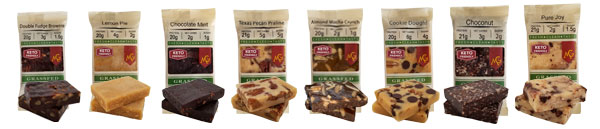
A protein coffee may make a morning cup more substantial. A whey isolate shake can add protein to a breakfast that would otherwise be light. A protein bar can bridge a long gap between meals, while collagen peptides can add protein to foods and drinks that already fit naturally into your routine.
The point is not to turn every snack into a mathematical exercise. It is to recognize that protein can help make food more satisfying and functional.
Does Every Protein Source Do the Same Thing?
Not exactly.
Once digested, all dietary proteins contribute amino acids. But protein sources differ in several ways:
- Their essential amino acid content
- How easily they are digested
- The amount of protein provided per serving
- Their levels of particular amino acids
- The fats, carbohydrates, vitamins, minerals, fiber, or other compounds that accompany them
- How well an individual tolerates them
Whey is a complete protein that supplies all nine essential amino acids. Collagen has a specialized amino acid profile but is not complete. Meat, poultry, fish, eggs, dairy, soy, and certain other foods provide complete proteins, while many plant foods contribute different combinations of amino acids.
You do not necessarily need every meal to contain every amino acid in perfect proportions. Eating a varied diet throughout the day can supply complementary amino acids from different foods.
Protein quality matters, but so do consistency, digestion, affordability, preferences, and the rest of the food you eat.
How Much Protein Do You Need?
There is no single ideal protein target for everyone.
The standard Recommended Dietary Allowance for generally healthy adults is 0.8 grams per kilogram of body weight per day, or about 0.36 grams per pound. This value is intended to cover basic needs for most healthy adults; it should not automatically be interpreted as an optimal target for every age, activity level, or goal.
Needs may be higher for people who:
- Regularly perform resistance or endurance exercise
- Are trying to preserve muscle while losing weight
- Are recovering from an injury, illness, or surgery
- Are pregnant or breastfeeding
- Are older and working to maintain strength and physical function
Research and expert recommendations for healthy older adults commonly discuss intakes around 1.0 to 1.2 grams per kilogram per day, with individual needs varying according to health and activity. People with kidney disease or other medical conditions should discuss protein intake with an appropriate healthcare professional rather than adopting a high-protein plan on their own.
It can also help to look beyond the daily total. Distributing protein among meals may be more practical than reaching dinner and realizing nearly all of the day’s protein still needs to be eaten.
Protein Has More Than One Job
Protein may have earned its reputation as the muscle macronutrient, but muscle is only one department in a much larger operation.
Your body uses protein and amino acids to:
- Repair and replace tissues
- Create enzymes
- Send cellular signals
- Maintain immune defenses
- Build structural tissues such as skin, hair, and connective tissue
- Support neurotransmitter-production pathways
- Make meals more satisfying and steady
Much of that work is invisible. You may notice stronger muscles after months of training, but you will not see an antibody being assembled or an enzyme helping a cell release energy.
Those quieter jobs are no less important.
Getting enough protein is not only about looking athletic, lifting heavier weights, or following a high-protein trend. It is about supplying your body with essential materials it uses every day—to repair, communicate, defend, regulate, and keep the entire system running.
Give Your Body More to Work With

Protein does far more than support muscle—it helps your body repair, communicate, defend, and keep everyday systems running. MariGold makes it easier to add high-quality protein to the foods and routines you already enjoy, whether that means collagen in your morning coffee, whey isolate in a smoothie, or a convenient protein-rich snack when the day gets busy.