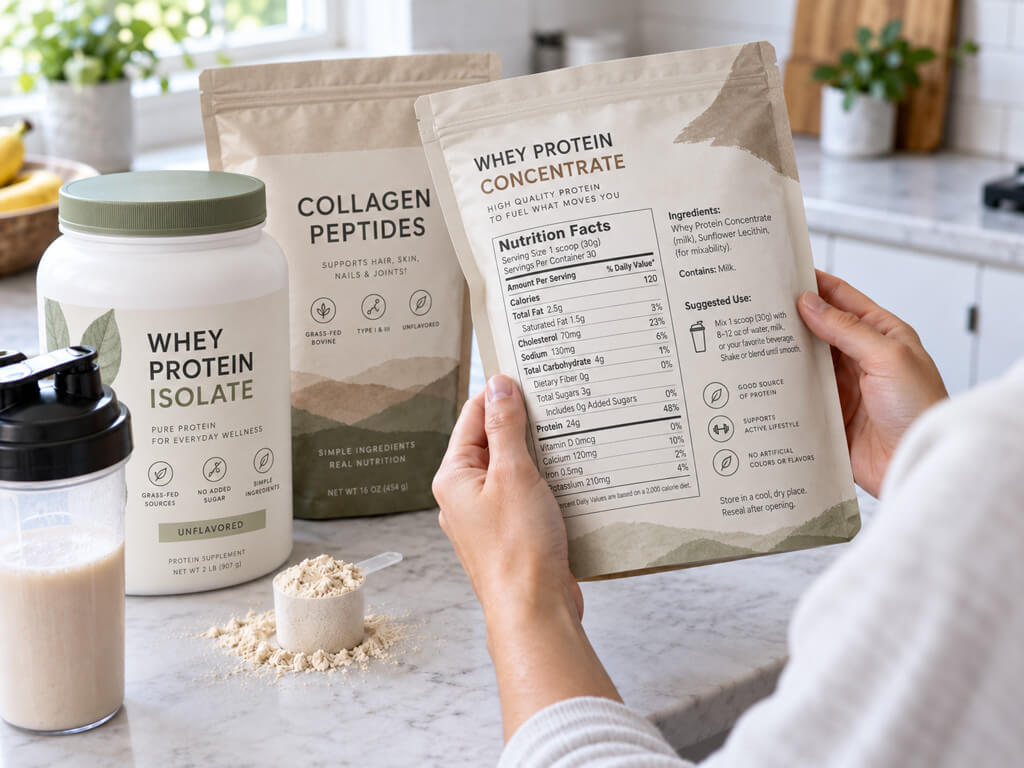
Picture this: you’re shopping for protein powder (or, let’s be honest, scrolling through options in your pajamas), and two tubs catch your attention. One says whey concentrate. The other says whey isolate—and comes with a noticeably higher price tag.
Both come from milk. Both provide complete protein. Both can help you meet your daily protein goals.
So why would anyone pay more for isolate?
Well, there’s actually a pretty good reason. Whey isolate delivers a higher concentration of protein, with less lactose, fat, and carbohydrates than concentrate. And depending on how often you use protein powder, that difference may be worth paying for.
That doesn’t mean concentrate is bad. Far from it. But if you’re buying a protein supplement specifically to get more protein into your diet, it makes sense to look at how much actual protein you’re getting in every scoop.
And as we’ll see, the price difference isn’t always as dramatic as the numbers on the shelf might suggest.
Wait, What’s Actually Different?
Both whey isolate and whey concentrate begin in essentially the same place: milk.
During cheesemaking, milk separates into curds and liquid whey. That liquid contains valuable proteins, which can be filtered, concentrated, and dried to create whey protein powder.
The difference comes down to how much processing and filtration the whey undergoes.
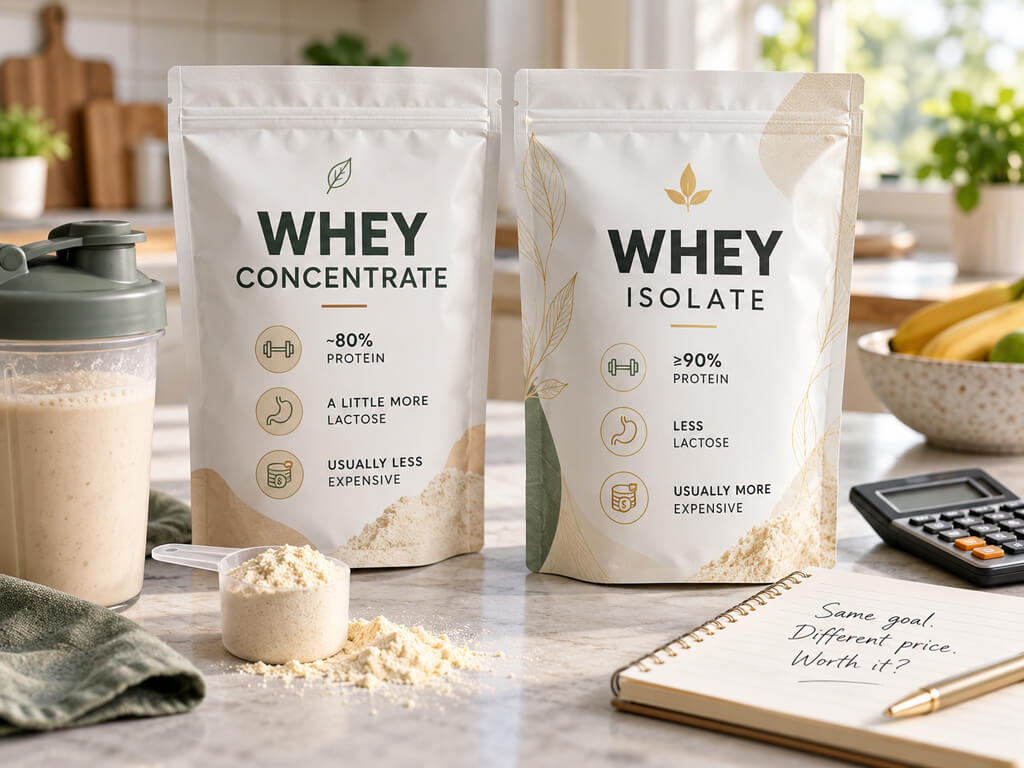
Whey concentrate typically contains up to about 80% protein in its commonly used WPC80 form. The remaining portion includes lactose, fat, minerals, and moisture.
Whey isolate undergoes additional filtration to reach at least 90% protein by dry weight, removing more of the lactose and fat along the way.
That extra filtration is the main reason isolate generally costs more to produce.
Here’s how they compare:
| Feature | Whey Concentrate (WPC80) | Whey Isolate |
|---|---|---|
| Protein concentration | Approximately 80% | At least 90% |
| Lactose | More | Significantly less |
| Fat | More | Less |
| Carbohydrates | Generally more | Generally fewer |
| Processing | Less filtration | Additional filtration |
| Price | Generally lower | Generally higher |
The difference might look relatively small on paper, but it can matter when you’re choosing a supplement you’ll use consistently.
If you’re interested in the details of protein quality, filtration, and how processing affects the finished product, we’ve also covered those topics in Is Grass-Fed Whey Protein Better? and Clean Protein Powder: 8 Things to Look for Before You Buy.
For now, let’s focus on what those differences mean for your wallet—and your daily nutrition.
What Are You Actually Paying For?
When you buy protein powder, you’re presumably buying it for one primary reason: protein.
Not lactose. Not fat. Not extra carbohydrates.
So rather than comparing two tubs by their sticker prices, it makes more sense to compare how much actual protein you’re getting for your money.
Think of it like shopping for groceries. You wouldn’t necessarily choose a larger package just because it looks like a better deal. You’d check the unit price to find out what you’re actually paying for.
Protein powder works the same way.
The Two-Minute Protein Math
Take the price of the tub and divide it by the total grams of protein inside.
Cost per gram of protein = Tub price ÷ (Protein per serving × Number of servings)
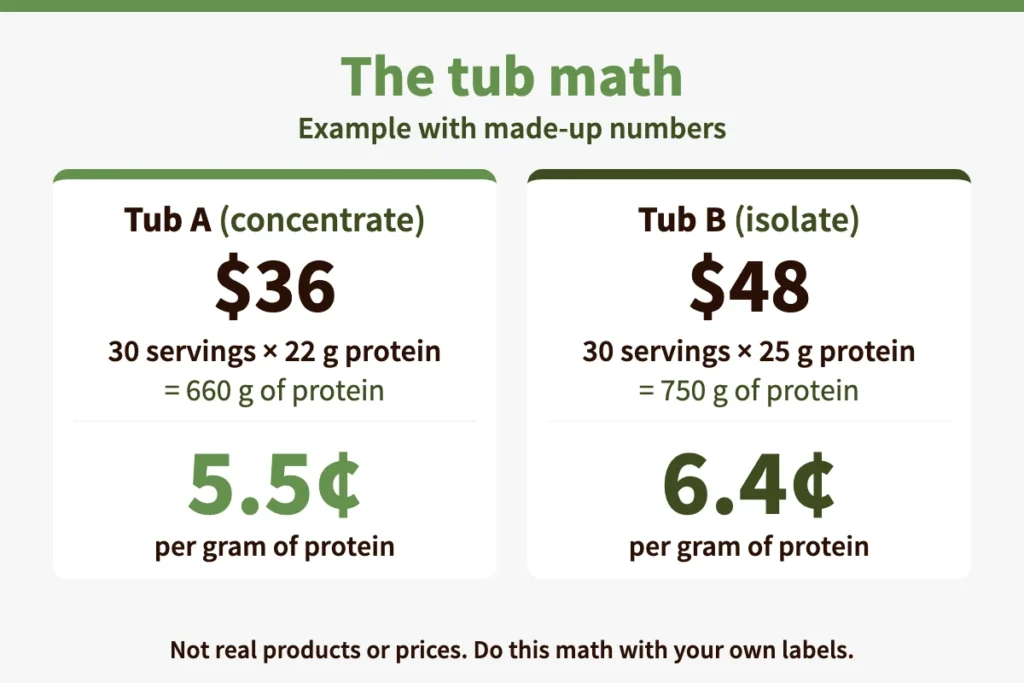
Here’s an example using made-up prices and serving sizes:
Tub A: Whey Concentrate
- Price: $36
- Servings: 30
- Protein per serving: 22g
- Total protein: 660g
- Cost per gram: 5.5 cents
Tub B: Whey Isolate
- Price: $48
- Servings: 30
- Protein per serving: 25g
- Total protein: 750g
- Cost per gram: 6.4 cents
At first glance, isolate looks considerably more expensive. You’re paying $12 more for the tub.
But look a little closer.
You’re getting 90 additional grams of protein, and the cost difference works out to less than one cent per gram of protein.
For some people, paying that small premium for a more concentrated protein with less lactose and fat is an easy decision.
Of course, prices and formulations vary. Some isolates carry a much larger premium, while others are surprisingly competitive.
The important thing is to compare what you’re actually getting—not just what you’re spending.
4 Reasons Whey Isolate May Be Worth the Extra Money
There are several practical reasons why someone might prefer whey isolate, even when concentrate costs less.
1. More Protein, Less of Everything Else
This is probably isolate’s biggest selling point.
When you purchase a protein supplement, the goal is usually to increase your protein intake without having to eat significantly more food.
Because whey isolate contains a higher percentage of protein, more of the powder you’re consuming is actual protein.
That can be especially appealing if you’re:
- Trying to increase your daily protein intake
- Watching your overall calorie consumption
- Following a lower-carbohydrate eating plan
- Looking for a convenient way to get protein without adding much fat or lactose
Now, we’re not suggesting that fat or carbohydrates are inherently bad. Both have important roles in a balanced diet.
But sometimes you want protein without a significant amount of anything else.
That’s exactly where isolate shines.
2. Less Lactose May Mean Better Digestive Comfort
If you’ve ever felt bloated or uncomfortable after drinking a protein shake, lactose could be one possible explanation.
Whey concentrate retains more lactose from milk than whey isolate.
According to the University of Wisconsin’s Center for Dairy Research, a typical 80% whey concentrate contains approximately 4–5% lactose, compared with around 1% in whey isolate.
For people who digest lactose comfortably, that difference may not matter much.
But if you’re lactose-sensitive, reducing your intake—even by a small amount—may help.
And here’s something worth remembering: you don’t have to be severely lactose intolerant to notice digestive discomfort.
Some people tolerate a little lactose just fine but begin experiencing symptoms when they consume larger amounts throughout the day.
Choosing isolate can reduce the lactose contributed by your protein powder, making it easier to manage your overall intake.
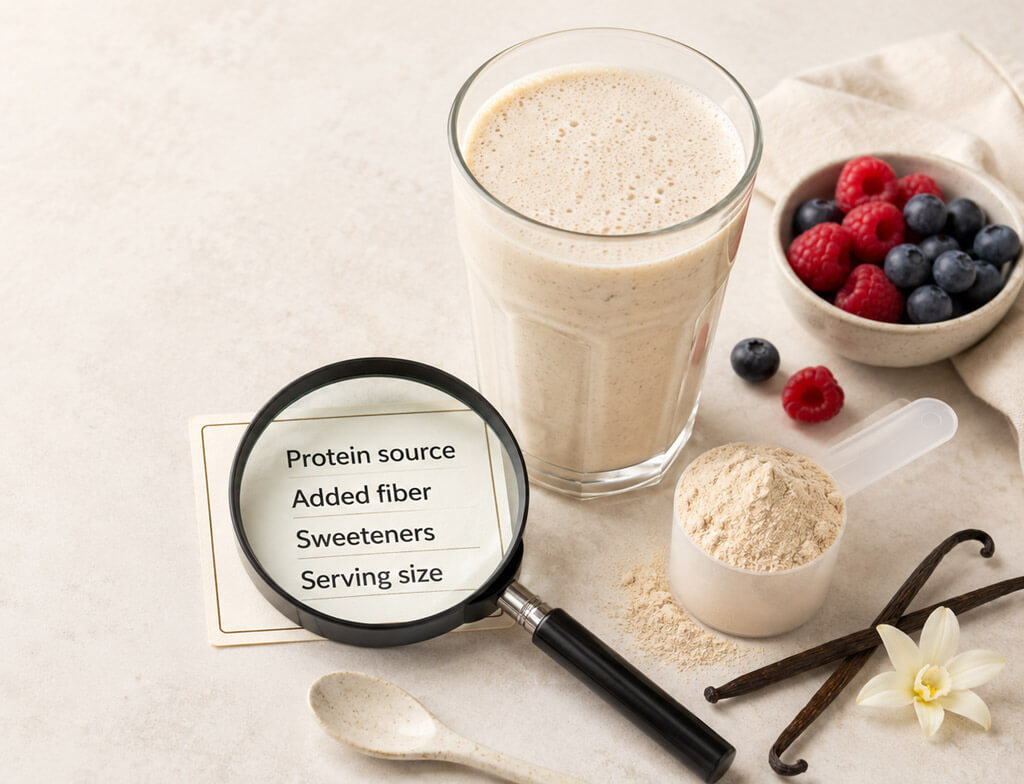
Of course, lactose isn’t the only possible explanation for digestive issues after protein shakes. Sweeteners, added fibers, serving size, and other ingredients can also play a role.
We explore those possibilities in Do Protein Shakes Cause Bloating?
Important: Whey isolate is not necessarily lactose-free, and because it’s derived from milk, it’s not suitable for someone with a milk protein allergy.
3. A Better Fit for More Precise Nutrition Goals
Not everyone tracks macros, and you certainly don’t need to calculate every gram of food to eat well.
But if you do pay attention to your protein, carbohydrate, and fat intake, whey isolate can make things a little simpler.
With its higher protein concentration, isolate generally delivers more protein relative to the other macronutrients in the powder.
For someone following a higher-protein, lower-carbohydrate eating plan, that can be convenient.
The same goes for people who want to increase protein intake while managing their overall calories.
The difference between individual products may only be a few grams here and there, so always compare the nutrition labels rather than assuming one particular powder is dramatically better.
Still, when your goal is to get a substantial serving of protein without much else, isolate offers a straightforward solution.
4. It Can Be a Practical Long-Term Investment
Here’s where the value conversation gets interesting.
If you use protein powder once every few weeks, choosing between isolate and concentrate probably won’t make much difference to your overall budget.
But if protein powder is part of your everyday routine, quality, nutrition, digestibility, and convenience start to matter more.
You’re choosing something you’ll consume regularly, potentially for months or years.
For someone who prefers a higher protein concentration and lower lactose content, paying a modest premium may be well worth it.
And when the actual difference is only a fraction of a cent per gram of protein, isolate can become a very reasonable upgrade.
The key word here is modest. If one product costs dramatically more without offering meaningful benefits for your needs, there’s no reason to assume the higher price automatically makes it the better purchase.
Does Whey Isolate Build More Muscle Than Concentrate?
This is where marketing claims can get a little ahead of the science.
You might see whey isolate presented as the superior option for serious athletes, bodybuilders, or anyone trying to build muscle.
But here’s what matters: both whey isolate and whey concentrate contain all nine essential amino acids, including leucine, which plays an important role in stimulating muscle protein synthesis.
The International Society of Sports Nutrition emphasizes getting enough high-quality protein throughout the day, with protein supplements serving as a practical way to help meet those needs.
It does not establish that whey isolate consistently builds more muscle than whey concentrate when comparable amounts of protein are consumed.
So why might an active person prefer isolate?
Because its higher protein concentration makes it convenient to get a substantial amount of protein in a serving while consuming less lactose, fat, and carbohydrate from the powder.
If you’re trying to reach a higher daily protein target, especially while keeping an eye on your overall nutrition, that’s a legitimate advantage.
Think of isolate as a more concentrated way to meet your protein goals—not a shortcut to bigger muscles.
When Does Whey Concentrate Still Make Sense?
We’ve made a good case for isolate, but concentrate certainly has its place.
Whey concentrate can still provide high-quality, complete protein and can be an effective addition to a balanced diet.
It might be the right choice if:
- You’re working within a tight supplement budget.
- You tolerate dairy comfortably.
- You don’t mind the additional lactose, fat, or carbohydrates.
- You find a concentrate with a significantly lower cost per gram of protein.
For some people, those considerations will outweigh the benefits of isolate.
And that’s perfectly reasonable.
But if the price difference is relatively small, choosing isolate gives you a higher concentration of protein and less lactose without requiring a major increase in spending.
That’s an advantage worth considering, especially if protein powder is something you use every day.
Why We Choose Whey Isolate for MariGold Protein Bars
At MariGold, we’re particular about our protein ingredients, and whey isolate is our choice for our whey-based protein bars.
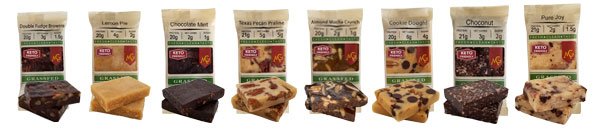
Our Texas Pecan Praline, Pure Joy, Cookie Dough!, and Chunky Choco Pecan bars feature whey isolate from grass-fed cows’ milk as the first ingredient.
Each bar provides 20–22 grams of protein, depending on the flavor.
Why isolate?
Because we appreciate the benefits of a concentrated, high-quality protein source, especially when creating products designed to make getting enough daily protein more convenient.
Of course, a protein bar involves more than just protein powder. Taste, texture, other ingredients, and convenience all factor into its value.
And just like with protein powders, the best way to evaluate any protein bar is to read the full nutrition label and ingredient list.
If you haven’t tried our bars yet, Pure Joy is a great place to start.
So, Is Whey Isolate Worth Paying More For?
For many people, yes—whey isolate is worth a little extra.
You’re getting a higher concentration of protein with less lactose, fat, and carbohydrates. Those are meaningful advantages if you’re trying to maximize your protein intake, manage your macros, or simply prefer a more concentrated protein supplement.
Does that mean concentrate is inferior protein? No.
Both provide complete, high-quality protein, and both can support your daily nutrition goals.
But if you’re choosing a protein powder specifically for its protein content, isolate offers some appealing advantages.
The trick is making sure you’re not overpaying for them.
Compare the cost per gram of protein, consider how your digestive system handles dairy, and think about how often you’ll actually use the product.
Sometimes the less expensive option is good enough. But sometimes paying a little more gets you exactly what you wanted in the first place: more protein, less of the extras, and a better fit for your everyday routine.
FREQUENTLY ASKED QUESTIONS
Your Questions About Whey Isolate vs. Concentrate, Answered
Is whey isolate worth the extra money?
For many people, yes. Whey isolate typically provides a higher percentage of protein with less lactose, fat, and carbohydrates than concentrate. If those benefits matter to you, particularly if you use protein powder regularly, the additional cost may be worthwhile. Compare the cost per gram of protein to determine the actual price difference.
Which is better, whey isolate or whey concentrate?
Neither is universally better, but whey isolate offers some practical advantages. It contains a higher concentration of protein and generally less lactose and fat. Whey concentrate is also a complete, high-quality protein, but isolate may be preferable for people with lactose sensitivity or more specific nutrition goals.
Is whey concentrate healthier than isolate?
Not necessarily. Both provide essential amino acids and can be part of a healthy diet. Concentrate retains more lactose and fat, while isolate provides a higher percentage of protein. Neither is inherently healthier for everyone. The better choice depends on your nutritional needs, digestive tolerance, and preferences.
Should I take whey isolate or concentrate as a beginner?
Whey isolate is a great option for beginners who want a concentrated source of protein with less lactose and fat. However, whey concentrate can also help you meet your protein needs. Whichever you choose, focus on your total daily protein intake, food quality, and consistency rather than expecting one powder to produce dramatically different results.
Is whey isolate better for bulking?
Not necessarily. Both whey isolate and concentrate can support muscle growth when combined with resistance training and adequate daily protein and calorie intake. Whey isolate is useful for adding protein without much additional fat or carbohydrate, while concentrate can also be an effective option when consuming extra calories isn’t a concern.
What is the difference between whey isolate and whey protein?
Whey protein is the general name for proteins derived from milk whey. Whey isolate is a more highly filtered form containing at least 90% protein by dry weight. Whey concentrate is another common form, often containing approximately 80% protein. Both are complete proteins, but isolate typically contains less lactose and fat.
Sources
- University of Wisconsin-Madison Center for Dairy Research, Dairy Ingredients FAQs (concentrate and isolate composition, cost)
- U.S. Dairy Export Council, Whey Protein Isolate (isolate protein content)
- U.S. Dairy Export Council, Whey Protein Common Questions (concentrate protein content, whey from cheesemaking)
- NIDDK, Eating, Diet, & Nutrition for Lactose Intolerance
- International Society of Sports Nutrition Position Stand: protein and exercise (2017)
We’re on Team Whey Isolate. How About You?

At MariGold, we use whey isolate in our protein bars because we love what it brings to the table. Each bar packs 20–22 grams of protein into a delicious, satisfying snack you can take just about anywhere.
Curious to give them a try? Our Protein Bar Starter Sampler is a great way to discover your favorite flavor!