If you’ve ever noticed that some dairy feels better in your body than others… there’s a reason for that.
And it has less to do with lactose – and more to do with what the cow was eating before it ever became milk, yogurt, or cheese.
It Starts With the Cow
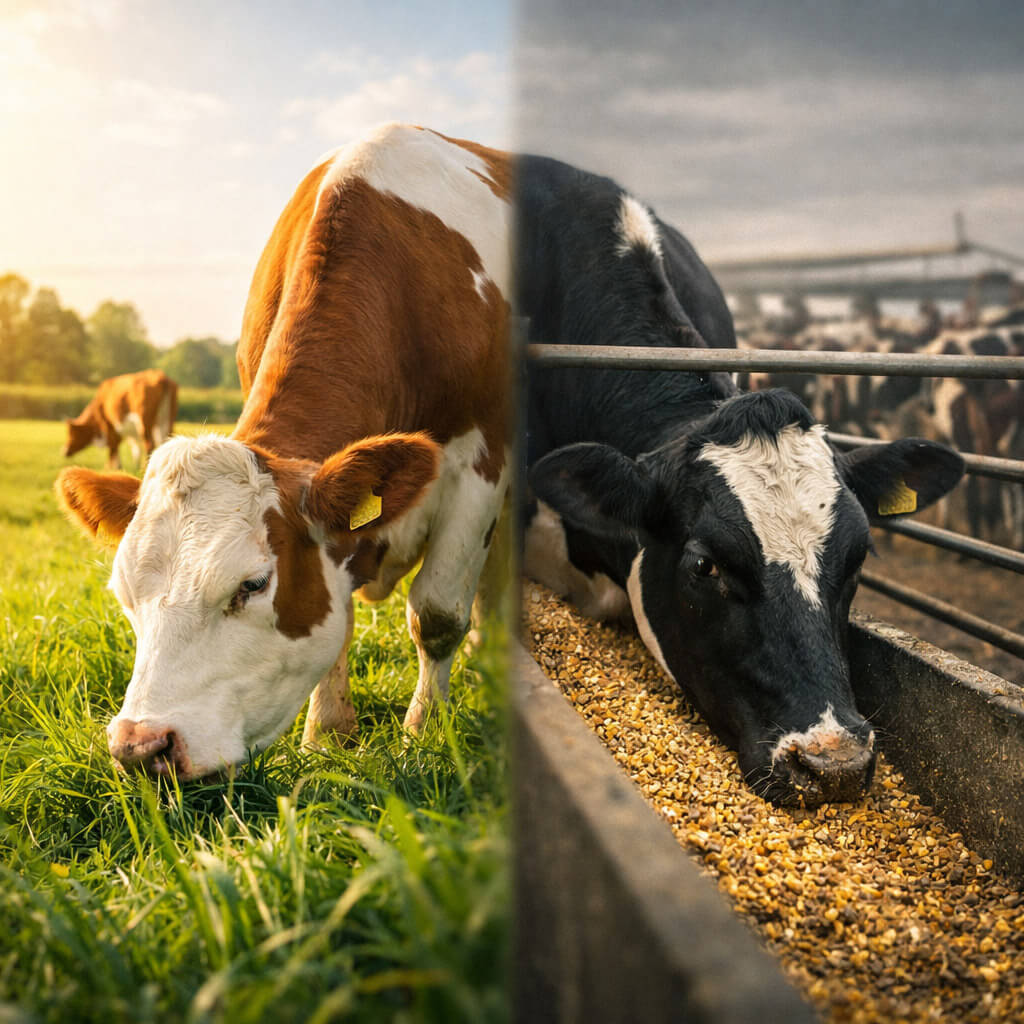
Cows are natural grazers. Their digestive systems are built to process grass – not grains.
But in modern dairy production, many cows are fed a diet heavy in:
- Corn
- Soy
- Industrial byproducts
This shift isn’t just about farming efficiency – it directly impacts the quality of the dairy itself.
Why Feed Changes the Nutrition of Dairy
The food a cow eats becomes the building blocks of its milk.
When cows are grass-fed, their dairy tends to contain:
- More omega-3 fatty acids
- Higher levels of CLA (a beneficial fat linked to metabolic health)
- Better fat-soluble vitamin content
When cows are fed corn and soy:
- Omega-6 fats tend to increase
- The overall fat profile shifts toward a more inflammatory balance
- Nutrient density can be lower
These differences may seem subtle – but over time, they can meaningfully impact how your body responds.
Fat Balance & Inflammation – A Modern Problem
Most people today already consume a high amount of omega-6 fats from:
- Processed foods
- Seed oils
- Packaged snacks
Adding dairy that’s also higher in omega-6 can further tip that balance.
Grass-fed dairy helps bring things back toward a more natural ratio of omega-3 to omega-6 – supporting a less inflammatory internal environment without requiring extreme diet changes.
Feed Quality & Chemical Exposure
Corn and soy crops are often grown using:
- Herbicides like glyphosate
- Conventional, high-input farming methods
While residue levels in finished dairy products are regulated, many people choose to limit exposure where possible.
Grass-fed and pasture-raised systems:
- Reduce reliance on these feed crops
- Often align with more natural farming practices
- Support a cleaner overall food chain
Why Some People Tolerate Grass-Fed Dairy Better
There’s a common pattern many people notice:
They struggle with conventional dairy… but do better with grass-fed.
Why might that be?
A more balanced fat profile
Less inflammatory load
Overall higher quality milk composition
It’s not a cure-all—but it’s a meaningful variable that often gets overlooked.
Not All Dairy Is Created Equal
When you look closer at the dairy aisle, there are clear differences between products:
Some focus on:
- Grass-fed or pasture-raised sourcing
- Organic or regenerative farming
- Simpler, more transparent ingredients
Others prioritize:
- Lower production costs
- Shelf stability
- Mass-scale efficiency
Neither is about being “perfect” – but the sourcing behind the product matters more than most labels let on.
A Closer Look at Popular Dairy Brands
If you scan the dairy aisle, you’ll notice a wide mix of brands—from grass-fed and pasture-raised options to more conventional, mass-produced products.
Some brands that prioritize grass-fed or more traditional farming methods include options like:
- Maple Hill
- Butterworks
- Stonyfield
- Alec’s Ice Cream
- Straus
- Cosmic Bliss
- Alexandre Family Farm
- Kalona SuperNatural
- Organic Valley (Grassmilk line)
- Nancy’s Yogurt
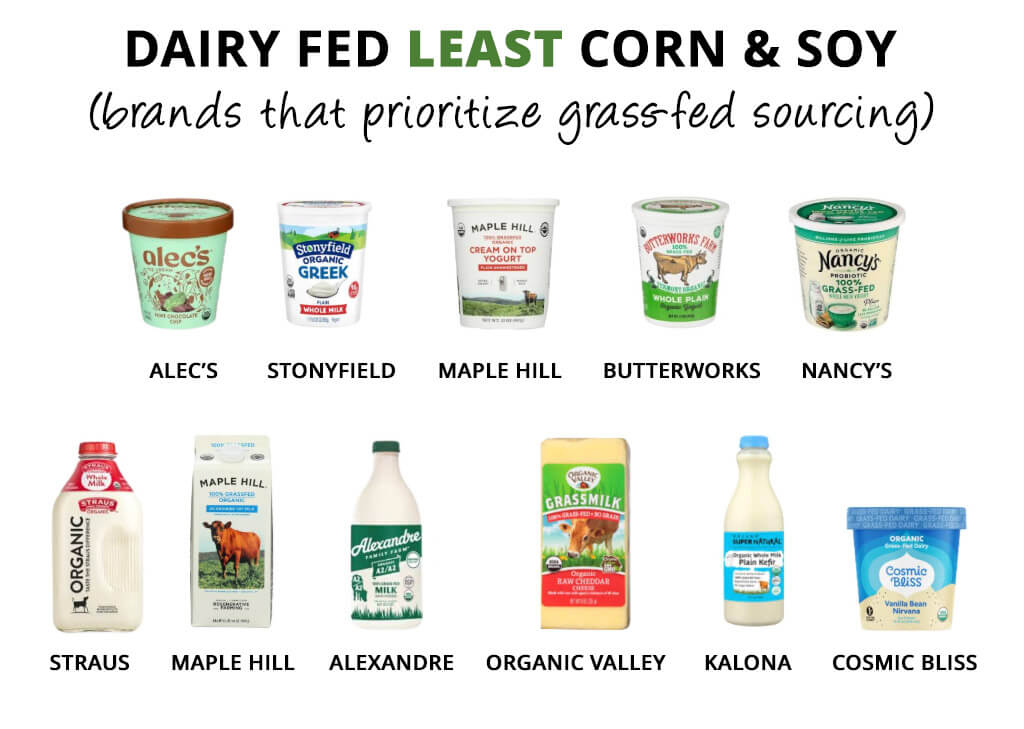
These tend to focus on pasture-based systems and simpler ingredient sourcing.
On the other hand, many well-known household names often rely on conventional dairy supply chains, where cows are more likely to be fed grain-based diets:
- Ben & Jerry’s
- Häagen-Dazs
- Chobani
- Breyers
- Halo Top
- Blue Bunny
- Dairy Pure
- Land O Lakes
- Fairlife
- Horizon
- Oikos
- Activia
- Kraft
- Cabot
- Sargento
- Boar’s Head
- Tillamook
- Philadelphia
- Yoplait
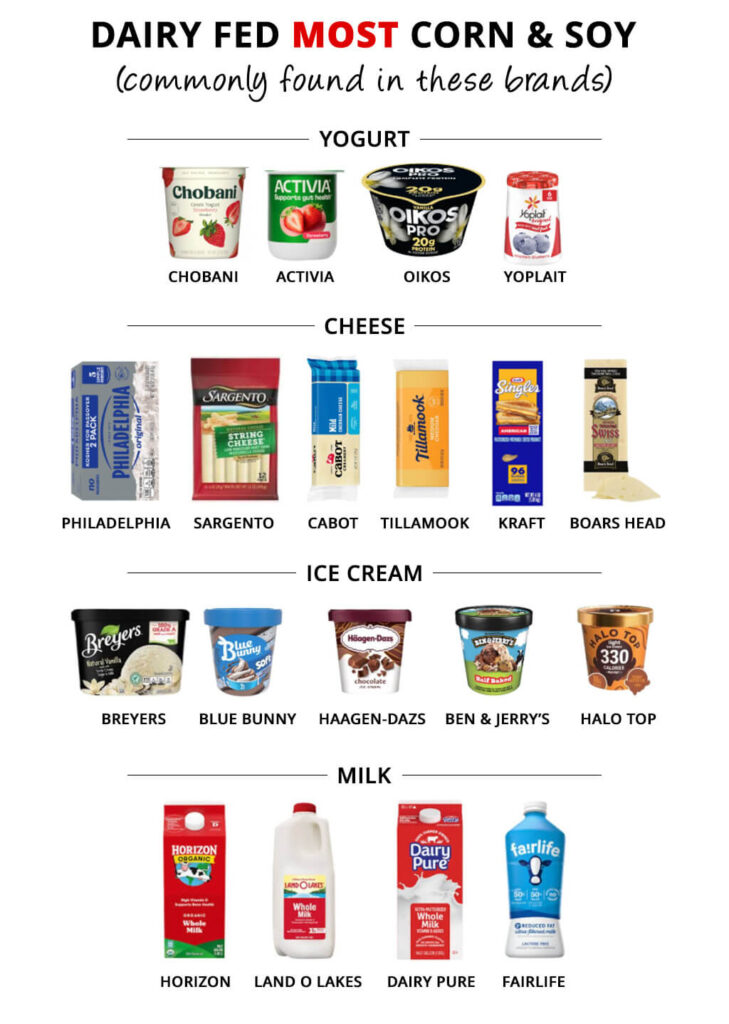
This doesn’t make them “bad” – but it does mean the sourcing, fat profile, and overall nutritional quality can be very different.
The takeaway isn’t to avoid everything – it’s simply to recognize that not all dairy is created the same, even if it looks similar on the shelf.
Why This Matters for Protein & Dairy-Based Products
This same principle applies beyond milk and yogurt.
When dairy is used to create products like:
- Whey protein
- Collagen peptides
- Protein snacks
…the quality of the original source still matters.
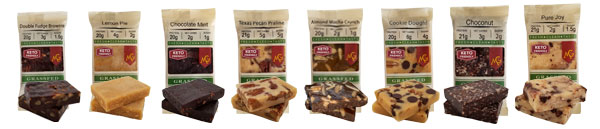
At MariGold, that’s why we prioritize grass-fed sourcing across our products. It allows us to deliver:
- Cleaner protein structures
- Better overall nutrient integrity
- A product your body can actually use efficiently
Because better inputs don’t just look good on a label—they show up in how you feel.
The Takeaway
You don’t need to overhaul your entire routine overnight.
But choosing grass-fed dairy when possible is a simple shift that can:
- Improve nutrient quality
- Support better digestion
- Help balance inflammation over time
And once you start paying attention to how different foods feel in your body… the difference becomes pretty clear.
Dairy isn’t just dairy.
It’s a reflection of how it was produced – from the ground up.
And that’s where the real difference beginsa
Better Starts at the Source
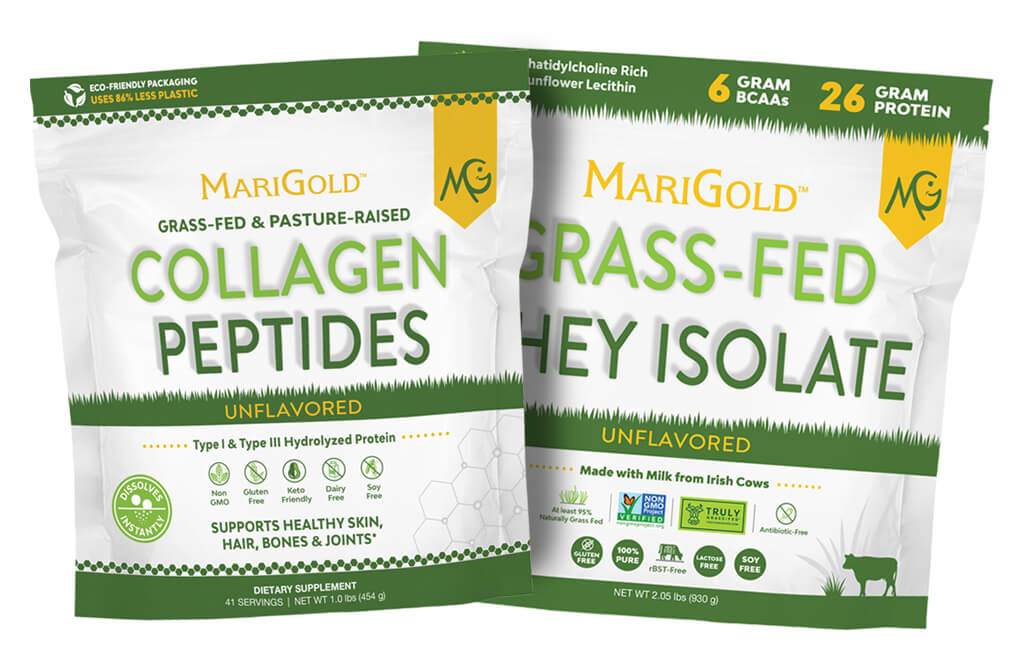
If what cows eat matters for your dairy… it matters even more for the protein you’re using every day.
That’s why MariGold protein powders – both our Grass-fed Whey Isolate and Collagen Peptides – are sourced from grass-fed cows, with a focus on quality from the very beginning.
Cleaner inputs, better structure, and a protein your body can actually use.